
Student guides
What to Do When a Service Goes Silent After Payment
Ghosted support is terrifying near a deadline. Follow a calm escalation ladder instead of panic posts.
Updated June 2026
The first hour after silence
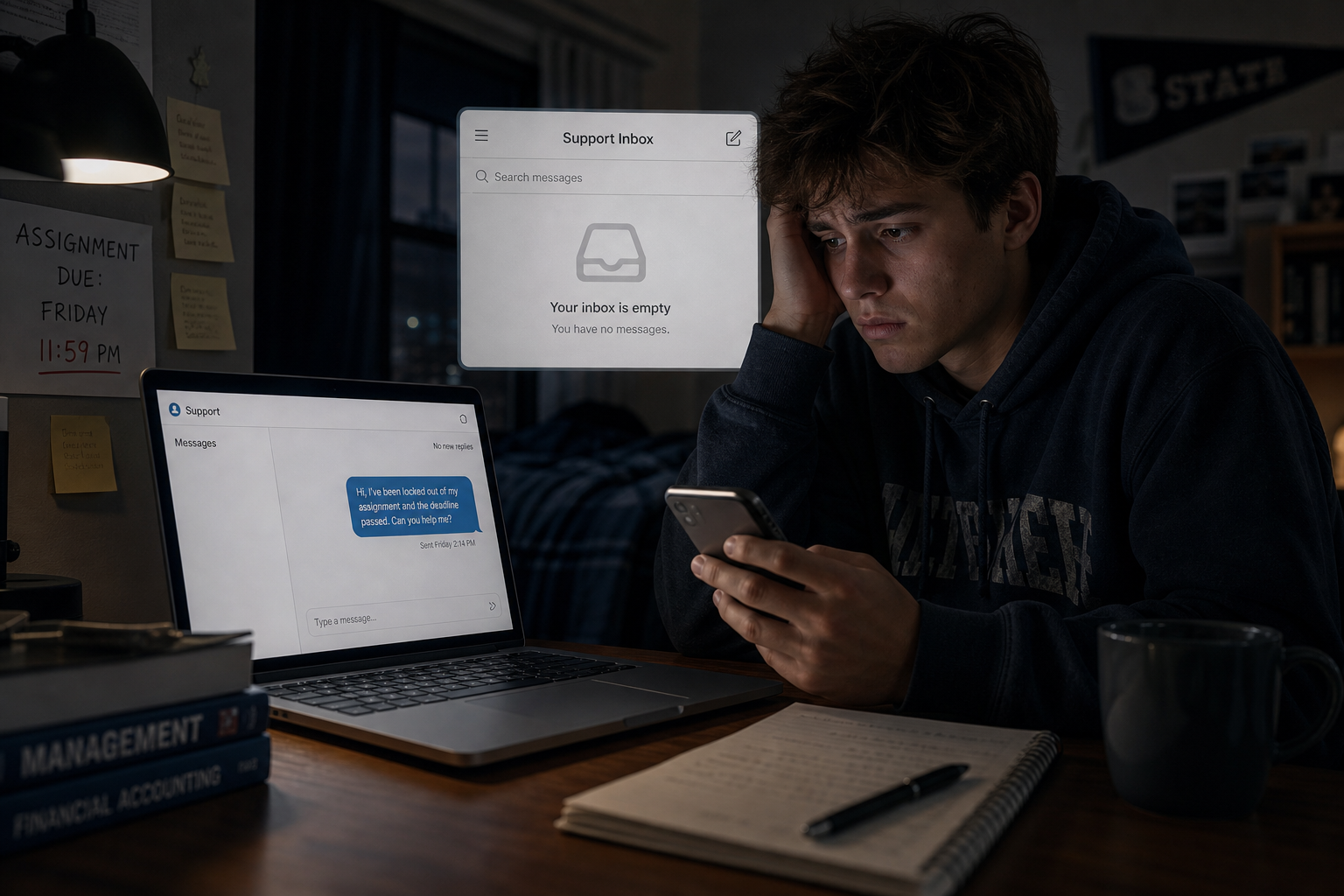
Silence after payment triggers panic, but the first hour rewards procedure over emotion. Open your evidence folder: checkout screenshot, terms capture, brief PDF, payment receipt, and every prior support message with timestamps. Confirm whether silence is truly silence—writers sometimes upload without notification emails, and dashboards lag. Refresh the order page, check spam folders, and try an alternate login browser before assuming fraud. False alarms waste less energy than missed recovery windows. Download any partial file immediately even if it looks incomplete; timestamps on partial uploads matter in later disputes. Note the exact minute you confirmed emptiness so later timelines stay precise under stress. Screenshot the empty delivery state while your system clock is visible in the same frame.
If nothing appeared, send one structured message through the official ticket system—not only live chat, which can reset when sessions close. State order ID, promised deadline in UTC and your local time, and a clear request: confirm writer assignment status and expected delivery within two hours. Avoid threats in message one; they encourage template deflection. Save the outbound timestamp. Parallel-path a backup plan: identify how many hours you need to self-write or reorder elsewhere if this vendor fails. Backup planning is not defeatism; it is deadline insurance. Starting a rough self-draft in hour one costs less than starting at hour twenty-four. A rough outline started now becomes salvage even if the vendor delivers late.
Do not post payment details or full briefs on public social threads yet. Public escalation comes later in the ladder. Hour one is for verified facts and calm documentation. Students who skip straight to chargebacks without ticket trails sometimes lose disputes even when vendors truly ghosted, because banks interpret missing contact attempts as premature. Procedure first, outrage never. Hour one documentation also prevents you from misremembering deadlines when stress compresses time perception. A single dated index file listing what you checked prevents contradictory stories later.
Ticket content that gets replies
Support queues prioritize tickets that look solvable. Lead with order metadata, not feelings. Subject line format: Order 12345 — deadline breach risk — writer status request. Body bullets: payment date, deadline quoted at checkout, last visible writer activity, attachments already provided, and specific question requiring yes-or-no operational answers. Paste the exact checkout sentence promising delivery by a certain time. Solvable tickets get human eyes faster than emotional paragraphs. Agents scanning queues respond to tickets they can forward to a supervisor without rewriting. Numbered bullets beat narrative paragraphs when agents triage hundreds of tickets daily.
Attach screenshots already organized; agents forward lazy tickets less often when evidence is one click away. Ask for named escalation if no human replies within the SLA you captured pre-sales—reference that SLA quote from your saved chat. Request supervisor callback email if phone support exists. Multiple short tickets beat one raging essay-length message that hides the order ID in paragraph four. Brevity with metadata beats length with drama. Each follow-up ticket should add new facts, not repeat the same paragraph with louder adjectives. Label attachments with order ID prefixes so agents open the right file first try.
Log every channel separately: chat transcript export, email headers, dashboard notes. When agents later claim you never contacted support, your thread index wins. Set a timer for the next escalation step based on objective lateness, not anxiety—many students wait too long hoping for mercy, then miss chargeback windows. Timers turn panic into scheduled actions you can execute calmly. A simple phone alarm labeled escalate at plus four hours removes decision fatigue when your heart rate is already elevated. Write escalation times on a sticky note beside your screen so anxiety does not rewrite the schedule.
Escalation and social pressure
Internal escalation should precede public shaming, but public pressure has a place when billing teams ignore supervisor tickets forty-eight hours before deadline. Post factual timelines on platforms where the brand maintains presence—Trustpilot, Reddit communities that allow vendor discussion, or student forums—with order dates and redacted screenshots. Omit slurs, fabricated claims, and unrelated grievances; moderators delete emotional posts and vendors dismiss them as noise. Facts travel; rage gets moderated. Public posts with order IDs redacted to last four digits still signal seriousness without exposing your full account. Stick to timestamps and ticket numbers moderators can verify quickly. Link to your ticket index PDF if the platform allows attachments.
Tag official accounts only when records are clean. A single thread stating: paid on DATE, deadline DATE, no file, tickets NUMBER and NUMBER unanswered since TIMES invites resolution teams scanning for reputation fires. Some brands respond faster publicly than privately; others ban accounts. Public escalation is a tool, not a guarantee—continue internal tickets simultaneously. Never rely on Twitter alone while internal queues sit idle. Copy public post URLs into your dispute packet so issuers see you exhausted visible channels before filing chargebacks. Public threads work best when they mirror ticket facts line for line without embellishment.
Social pressure fails against pure scam domains that rebrand weekly. Recognize the difference: established operators with years of reviews may fix silence to protect ratings; throwaway clones will not. For clones, shift energy immediately toward payment recovery rather than waiting for a community manager who does not exist. Scams deserve chargebacks, not reputation campaigns. Domain age and review depth help distinguish clones from established brands worth public pressure. WHOIS age under twelve months plus identical copy across domains should trigger recovery mode, not reputation threads.
Partner protection paths
Payment partner protection—card issuer, PayPal, or wallet dispute desk—is your structured backup when vendor escalation stalls. Each pathway demands a coherent narrative: what you bought, when delivery failed, how you attempted resolution, and what terms promised. Attach the ticket log, terms screenshots, and empty dashboard delivery state. Issuers file categories differently; non-delivery differs from quality disputes, so label accurately. Mislabeled disputes slow everything down. Lead with the category that matches your evidence strongest, not the category that sounds most dramatic. Non-delivery fits ghosting when dashboards show zero files and tickets document unanswered contact.
Some processors offer provisional credits while investigating; others wait for merchant response windows lasting weeks. Ask your bank about timelines when the assignment deadline is days away, not months. Partner protection does not pause university due dates—you still need a contingency draft. Treat recovered funds as partial compensation, not academic salvation. Money back does not restore lost study time. Provisional credits still require you to submit something defensible to your instructor if the deadline cannot move. Ask whether provisional credit affects dispute category choice before you assume either path is automatic.
Legal small-claims paths exist for large thesis deposits in some jurisdictions but move slowly relative to semester clocks. Reserve them for four-figure losses with clear fraud indicators. For typical essay orders, documented chargebacks or wallet cases resolve more student cases than attorney letters—especially when merchants fear processor penalties and settle with partial refunds to close cases quickly. Legal routes are last resorts, not first panic buttons. Attorney demand letters months after semester ends rarely help when your immediate problem is tomorrow's upload deadline. Small-claims timelines measured in months lose to chargebacks measured in weeks for typical order sizes. Keep legal research separate from hour-one recovery so panic does not split your attention.
Chargeback timing basics
Chargeback windows vary by card network and reason code, but delays hurt more than premature filing. Most issuers expect you to contact the merchant first and wait a reasonable period—often several business days—unless fraud involves stolen card data unrelated to your voluntary checkout. Silence combined with missed deadline plus ignored tickets usually satisfies good-faith contact requirements if your log is thorough. Thorough means dated, not voluminous. A concise ticket index with timestamps beats fifty pages of repeated complaints. One-page timelines with ticket numbers satisfy most issuer good-faith checks without drowning reviewers. Include your first structured ticket and the vendor's last non-response in the dispute narrative.
File while evidence is fresh: terms pages still match screenshots, agents have not deleted chats, and calendar math is obvious. Explain whether any partial file arrived and why it failed scope—partial delivery disputes differ from total ghosting. Include your backup plan costs only if terms explicitly cover consequential damages; most do not, so keep claims focused on the order amount. Stay within the amount you actually paid. Overclaiming damages gives merchants an easy win when they show terms excluding consequential loss. Screenshot terms the day you file in case merchants edit pages mid-dispute.
After filing, vendors may ban accounts or threaten collections per their terms. Separate emotional response from strategy: a successful chargeback on a ghosted order you will never use again is still a win. Learn the vendor's silence pattern, update your personal shortlist, and block future impulse orders during sleep-deprived weeks. Silence teaches expensive lessons; documentation determines whether the lesson costs money or only time you can never buy back. Archive the dispute outcome beside your vendor log so silence patterns inform next term's shortlist. Note whether silence began before or after writer assignment; patterns differ by failure mode. Share anonymized timelines with classmates only after disputes close so advice stays accurate.
Compare services with real review data
Use our match tool or read ranked reviews before you order — human writers, tracked cashback on partners, and quality index scores side by side.
Related reading
More in blog
Service reviews
Ranking guides