
Student guides
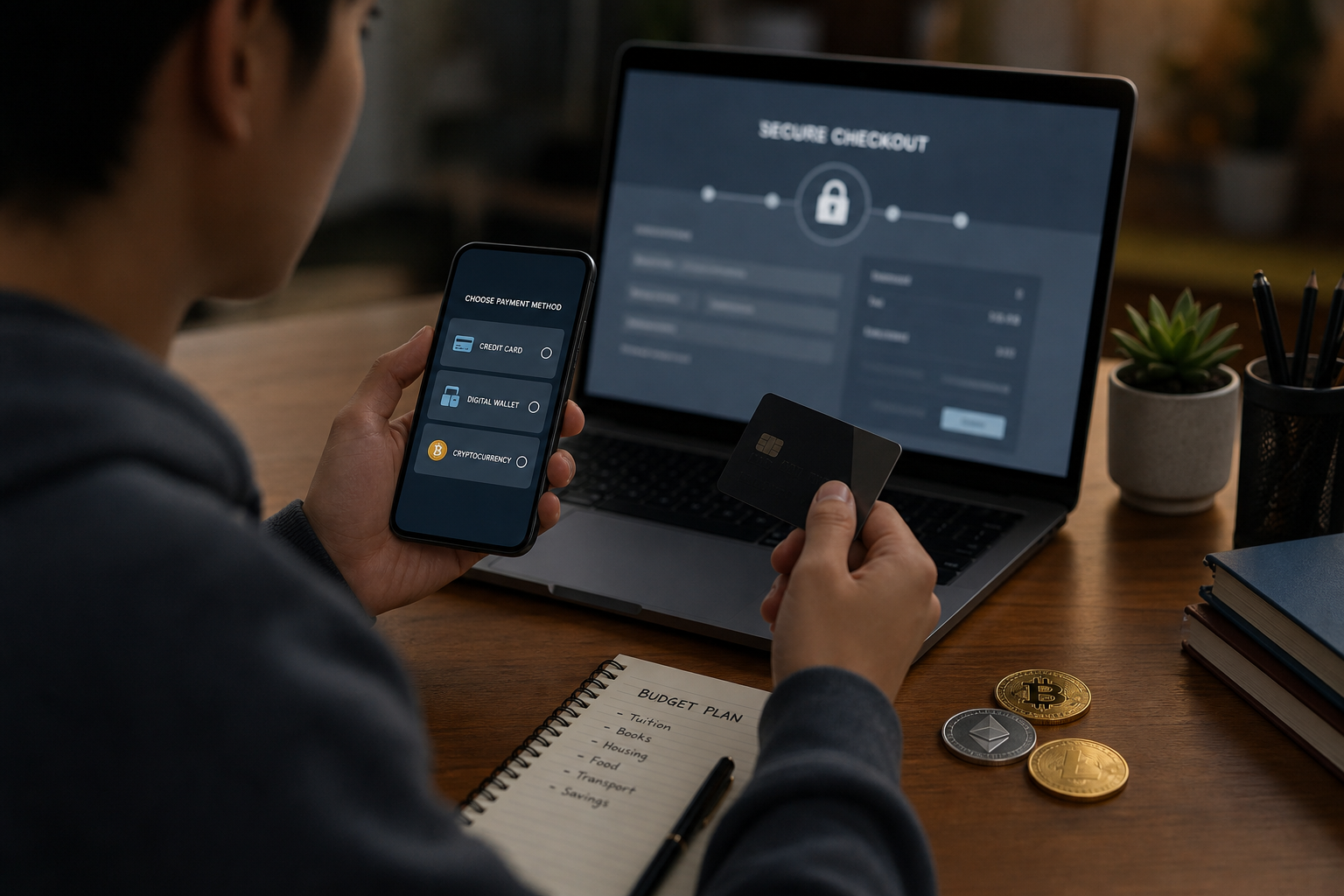
Payment Method Safety: Cards, Wallets, and Crypto
Payment choice affects dispute leverage. Know what each method costs you in evidence and recovery.
Updated June 2026
Cards and chargeback leverage
Credit and debit cards remain the most practical payment option for students who may need dispute leverage later. Card networks allow chargebacks when merchants fail to deliver agreed services, though success depends on documentation—not outrage. Issuers classify essay orders inconsistently; some treat them as intangible services with stricter evidence requirements. That makes your pre-payment screenshots of revision windows, delivery deadlines, and refund language more important than the card brand you carry. Premium cards do not override network rules about intangible goods. Student cards with lower limits can still file disputes successfully when the evidence packet is organized; the network cares about merchant behavior, not your account tier.
Use a dedicated card or virtual card number when trying an unfamiliar vendor for the first time. Virtual numbers limit exposure if a clone site harvests credentials, and they simplify cancellation after a bad experience. Avoid debit cards tied to rent money when possible: chargeback timelines can leave accounts frozen during investigation. Before checkout, confirm the merchant descriptor matches the company you researched—a mismatch often indicates a payment aggregator that will complicate disputes. Screenshot the descriptor from a small authorization hold if the site offers one. Some banks let you set per-merchant spending caps on virtual numbers, which adds a second brake against surprise upsells at checkout.
Partial delivery scenarios trip up many chargeback attempts. If a writer submits a rough draft but misses your deadline, the issuer may view that as a quality dispute rather than non-delivery. Cards help most when the vendor goes silent entirely or charges without opening an order dashboard. Pair card payments with written support tickets timestamped before the deadline so your bank file shows you attempted resolution in good faith. Quality disputes succeed less often than total non-delivery claims with clean ticket logs. When partial files arrive, document exactly which rubric sections remain missing so your dispute narrative stays precise rather than emotional.
Wallets and dispute limits
PayPal and similar wallets feel safer because they sit between you and the merchant, but student buyers often discover the buyer protection gaps too late. Protection policies exclude many digital services outright or require proof the seller violated a clearly stated guarantee. Vendors know this and sometimes steer checkout toward wallets while advertising card options only in fine print. Read the wallet's digital-goods policy before assuming a login dispute will mirror a shoe return. Policies change; capture the relevant paragraph at payment time. Wallet policies also differ by country of account registration, so a policy your roommate quoted may not govern your dispute.
Wallets also merge money movement with identity. Your university email connected to a personal PayPal account creates a paper trail you may not want linked to essay orders if accounts leak during a platform breach. Use separate email aliases and enable two-factor authentication on whichever wallet you choose. If a vendor requests friends-and-family payment to skip fees, refuse—that path removes most protection and signals either inexperience or intent to evade refund rules. No legitimate operator needs friends-and-family for a first order. Wallets that display your real name to merchants can also surface in retargeted ads if the vendor runs aggressive pixel tracking after checkout.
When wallets work well, they work because documentation lives in one thread. Export transaction IDs, message logs, and dispute outcomes to offline storage immediately after each interaction. Wallet cases sometimes close within weeks with minimal student input if timestamps clearly show non-delivery. Treat wallet payments as acceptable for repeat vendors you have already tested with small orders, not for first-time high-stakes thesis deposits. First orders deserve card leverage until trust is earned through delivery history. After a successful wallet dispute, note whether funds returned as balance or to your funding source—balance refunds lock you into the ecosystem you may want to exit.
Crypto and irreversibility
Cryptocurrency checkout appears on some essay sites as a discount incentive or privacy promise. Both pitches obscure the core fact: blockchain transfers are effectively irreversible once confirmed. No chargeback pathway exists when a writer disappears after you send USDT to a wallet address displayed only on a Telegram channel. Students attracted by anonymity often lose both money and leverage—the worst combination near a deadline. Discount percentages rarely compensate for zero recovery options. Law enforcement and campus conduct offices operate on different timelines than blockchain confirmations, so treat crypto as gambling with your tuition money rather than a privacy feature.
Crypto also attracts clone operators because settlement bypasses regulated payment processors that might flag high-risk merchants. A site offering thirty percent off for Bitcoin may exist solely to collect one-time payments before rotating domains. Even legitimate platforms that accept crypto rarely improve delivery quality because of it; they merely reduce their processing costs while transferring all risk to you. Treat crypto as suitable only when you already trust the vendor through prior card orders and accept total loss if something fails. Never use crypto for a first interaction with any brand. Rotating wallet addresses on checkout pages are a common sign the operator expects chargeback pressure on their card rails and wants crypto-only victims.
If you ignore this advice and pay anyway, treat the transaction hash, wallet address, and full chat archive as your only evidence bundle. Screenshot the checkout page showing promised delivery times before sending coins. Understand that law enforcement and university honor councils operate on different timelines than blockchain confirmations—recovering funds is unlikely. For academic work with grade consequences, irreversible payment methods are mismatched to the stakes regardless of how convenient checkout feels in the moment. Store evidence offline immediately; scam domains vanish within days and take hosted chat logs with them.
Checkout screenshot discipline
The checkout page is a contract snapshot most students never save. Capture the full browser window showing base price, selected deadline, writer level, add-ons, revision policy summary, and order ID if visible. Include the URL bar to prove which domain you paid, critical when clone sites mimic brand names. Do this before clicking pay, not after panic sets in when support stops responding. Mobile browsers that crop screenshots still need full-page captures via scrolling stitch tools if necessary. Include the date and time visible in your system tray or status bar in at least one capture so later disputes can anchor timelines without argument.
Mobile checkout deserves the same discipline. Phone screenshots sometimes crop merchant names or omit terms expandable only via tiny links. Scroll through the entire summary and expand every accordion section before payment. If the site blocks screenshots, that itself is a red flag—log out, switch to desktop, or abandon the cart. Honest operators expect buyers to keep records. Blocking screenshots suggests operators who anticipate disputes more often than satisfied repeat customers. On iOS and Android, use built-in screen recording for thirty seconds if static captures fail to show expandable sections that contain refund triggers.
Organize files immediately: YYYY-MM-DD_vendor_orderID_checkout.png in a folder synced to cloud storage you control. Pair each screenshot with the confirmation email and the brief you submitted. When disputes arise six weeks later, students who can produce a clean timeline outperform those relying on memory or deleted chat logs. This habit takes ninety seconds and determines whether your bank or wallet team takes you seriously. Name files consistently so you can find them under stress. A one-page index note listing filename, order ID, and amount paid saves search time when your issuer asks for documents by phone.
Receipt and invoice storage
Confirmation emails often land in promotions tabs or spam folders, then auto-delete under university mailbox quotas. Forward receipts to a personal archive the day you pay. PDF invoices matter when vendors change names after acquisition or rebrand—the old invoice ties your payment to the entity that made promises. Download any invoice the dashboard generates even if email confirmation seems sufficient. Dashboard invoices sometimes include line items emails omit. Set a mailbox rule that auto-forwards messages from vendor domains to your personal archive so a single missed manual forward does not cost you a dispute.
Currency records help too. Students paying in euros for a site quoting dollars sometimes dispute incorrect amounts because FX fees blurred the total. Note the charged amount, currency, and exchange rate on your receipt copy. Match that against the order dashboard total; discrepancies should be flagged within twenty-four hours while support still answers quickly. FX surprises are easier to reverse immediately after authorization than weeks later when writers already started. Multi-currency wallets may settle in a third currency, so capture the exact amount debited from your funding source, not just the checkout display total.
Retention policy: keep payment and delivery evidence until the course ends and any grade appeal window closes—not until submission day. Honor code inquiries can lag behind assignment deadlines by weeks. A structured folder per term beats scattered phone photos. When you finish a course without incident, archive and delete sensitive materials you no longer need. Good storage hygiene protects you during disputes without turning your laptop into an unnecessary hoard of old orders nobody will ever review again. Encrypt folders that contain briefs with personal identifiers, especially if you sync to shared family cloud accounts.
Compare services with real review data
Use our match tool or read ranked reviews before you order — human writers, tracked cashback on partners, and quality index scores side by side.
Related reading
More in blog
Service reviews
Ranking guides