
Independent review · 2026
PaperFellows Review
PaperFellows (paperfellows.com) is a mid-tier generalist with a peer-style positioning, a 7.4/10 trust score, and an unhappy AI-risk profile (4.0/10) that puts it on the wrong side of the originality conversation for graded work. Indexed entry is $14/page on a 12-hour minimum deadline. Use it for low-stakes coursework where structure matters more than voice; do not use it on assignments where Turnitin sensitivity is the dominant grading axis.
paperfellows.com · #48 in TOP 100
Peer-style support
Our verdict
PaperFellows (paperfellows.com) is a mid-tier generalist with a peer-style positioning, a 7.4/10 trust score, and an unhappy AI-risk profile (4.0/10) that puts it on the wrong side of the originality conversation for graded work. Indexed entry is $14/page on a 12-hour minimum deadline. Use it for low-stakes coursework where structure matters more than voice; do not use it on assignments where Turnitin sensitivity is the dominant grading axis.
Overview
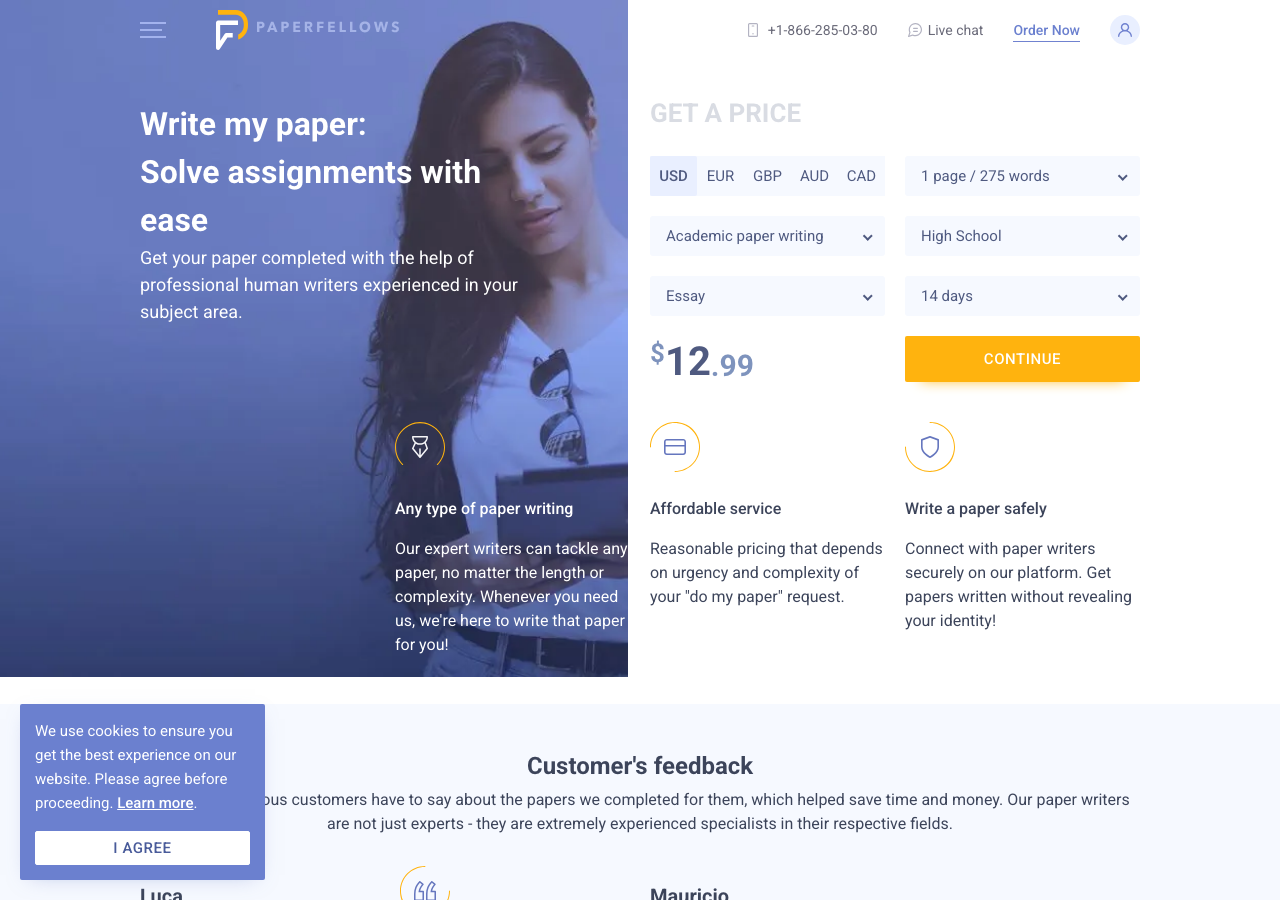
PaperFellows leans on a peer-support framing — the homepage promises helpful equivalents to study buddies rather than anonymous outsourced ghostwriters. That positioning is genuine in chat tone but does not change the underlying mechanics: orders go through a writer-matching layer, drafts arrive in the chosen deadline tier, revisions follow standard ticket logic. Read the marketing as voice rather than as a different product.
Indexed metrics are the truer story. Trust 7.4/10 is a clear notch below the partner cluster (PaperHelp 8.4, EssayPro 8.7) and a clear step above the budget tier. AI-risk 4.0/10 is the metric to weigh carefully — it sits in the band where third-party complaint themes about generic transitions, repeated topic-sentence shapes, and ChatGPT-style closing paragraphs become common. On graded originality-sensitive work, that profile is a real cost.
Volume in our snapshot is 5,480 combined Trustpilot and Sitejabber signals — Trustpilot 4.4/5 across about 2,800 reviews and Sitejabber 4.3/5 across about 2,680. Blended 4.4/5 is workable for cautious trial orders; it is not the proof base needed for high-confidence ordering on graduate work. PaperFellows is not a verified Best Essay Services partner, so cashback and protection on tracked links do not apply.
Where PaperFellows is interesting is the design coherence. The catalog is built around 12-hour-or-longer planned coursework — essays, research papers, homework, structured assignments — and the writer pool sits comfortably on that workflow. The order form is calm rather than panic-coded, which suits the catalog identity.
Where the brand is honest is the AI-risk score. 4.0/10 is the band where generic structural patterns — five-paragraph essays where every body paragraph opens with a topic sentence and closes with a thesis restatement — show up disproportionately in third-party complaint themes. The catalog can deliver clean structure on time. It cannot reliably deliver voice that matches your prior submissions without your edit pass.
Volume of about 5,480 combined signals is enough to confirm operational reality and not enough for confident subject filtering. Read the most recent thirty Trustpilot stories before paying, and bias toward complaints that name the same operational symptom — generic prose, missed nuance on rubric, slow assignment during finals — rather than chasing the average.
The closest comparisons inside the index are EssayPro at $14/page with 8.7/10 trust and a 3.2 AI-risk score (the easy upgrade when budget allows), College-Paper at the same college-focused UX cluster, and EssayHub at the marketplace adjacent. PaperFellows is the workhorse pick when the structure is the binding constraint and voice can be edited locally.
Pricing policy
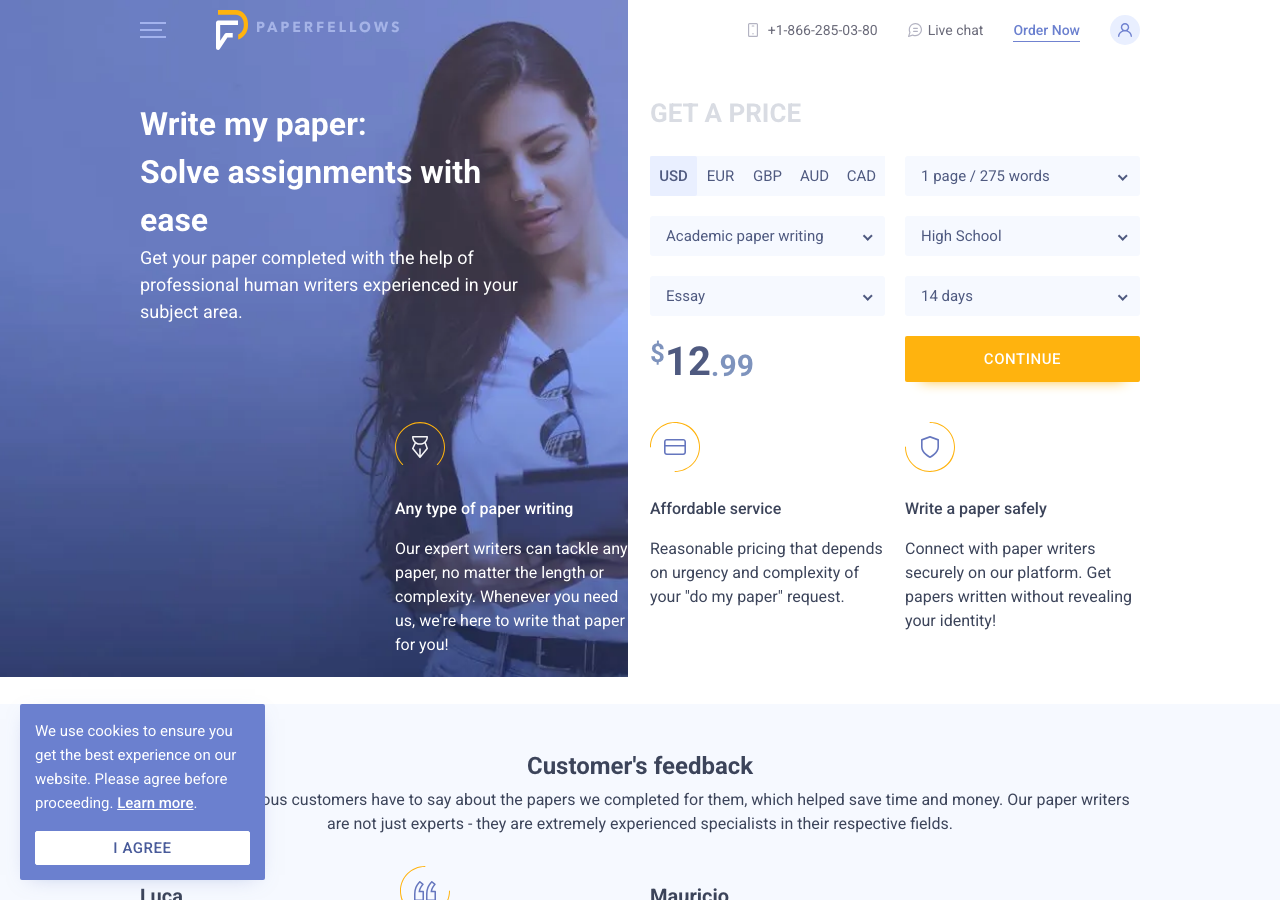
Indexed entry is $14 per page on the longest deadline at the lowest academic level. The base rate is honest for the catalog band and lines up with EssayState ($13) and College-Paper ($13). Quote your real assignment in the calculator before celebrating the homepage figure; level and deadline drive the multiplier more than the entry suggests.
On long-deadline coursework — five to eight pages booked 24-plus hours out — PaperFellows is competitive against same-band brands once add-ons are stripped. The 12-hour minimum is the catalog’s design center, which keeps writer-pool depth aligned with planned work rather than rush economics.
Add-ons sit one click below the cart total — top writer, plagiarism scan, abstract, premium editing. The writer-tier upgrade is the most defensible on PaperFellows specifically because the AI-risk profile improves materially when the platform routes the order to senior pool members. Decline the rest unless the rubric explicitly demands them.
Refund leverage on third-tier brands works on revision-and-partial-credit logic. Full refunds are rare when the SLA was met. The most reliable cost-saver is a tighter brief and a longer deadline — not haggling after delivery. On graded papers, the AI-risk profile is the part of the order that benefits most from a careful upload-the-rubric-as-a-file step in message one.
Customer support
Live chat is the channel that matters most in the first ten minutes after payment. Confirm writer assignment, restate citation manual, lock source rules. PaperFellows agents lean into the peer-support framing in tone, which can shift the early conversation from transactional to collaborative if you bring the rubric and ask specific questions rather than open-ended ones.
Revision tickets succeed when they read like rubric annotations. ‘Section 2 missing counter-argument per rubric line 4, add 80–120 words’ gets writer time. ‘Sounds AI, rewrite’ does not — and on a 4.0 AI-risk platform that ticket flavor is the most common student frustration. Translate the frustration into precise paragraph-level instructions; that is the only revision shape that reliably moves the draft.
Negative themes in third-party reviews cluster on generic prose (the AI-risk profile expressed as student frustration), addon disputes during finals weeks, and slow writer assignment during peak periods. Order one day earlier than you think you need during midterms and finals, and screenshot the cart before paying.
Because PaperFellows is not on our partner protection list, escalation runs through the platform’s own policies. The dispute path works on documented evidence — numbered tickets, rubric attachments, timestamped chat logs. The discipline transfers cleanly to verified-partner brands when stakes warrant the upgrade.
Features & differentiators
PaperFellows is differentiated on tone rather than mechanics. The peer-support framing lowers the cognitive cost of asking detailed questions in chat, which on this band of brand often translates into better revision outcomes than the transactional brands at the same price. That is a soft advantage and a real one — chat agents who answer in plain language route niche-subject orders better than scripts do.
Work-type coverage in our catalog includes essay, research, coursework, and homework — generalist undergraduate stack. Admission essays, scholarship statements, and dissertation chapters do not match the metric profile; the AI-risk score (4.0) lands those use cases in the wrong band for confident recommendation.
The 12-hour floor defines the rush ceiling. Compare PaperHelp or WritePaper when the deadline is measured in hours; PaperFellows is not the rush brand even when the calculator suggests a six-hour tier on simple essays.
Domain hygiene is straightforward — paperfellows.com is the indexed domain. Verify the URL at payment regardless; budget-and-mid-tier keywords attract mirror sites more than partner-tier brands do.
On the comparison axis, PaperFellows reads sensibly against EssayPro at the same $14 entry with much better trust and AI-risk metrics, and against College-Paper at the college-focused UX cluster. Each of those competitors has a tighter identity; PaperFellows competes on tone and consistent execution at the same price.
Pros and cons
Pro one: peer-support tone in chat. Real benefit on niche subjects where revision conversations need to be detailed rather than transactional.
Pro two: 12-hour design center. Catalog and pricing assume planned coursework, which keeps writer-pool depth aligned with long-deadline workflows.
Pro three: blended 4.4/5 across about 5,480 reviews — enough proof to confirm operational reality.
Con one: AI-risk 4.0/10. Generic-prose complaint themes are common; on Turnitin-sensitive courses this is the dominant cost.
Con two: trust 7.4/10. A clear notch below the partner cluster — for high-grade-weight assignments, the upgrade is worth the dollar.
Con three: no partner cashback or protection on tracked links — documentation discipline replaces mediation.
Bottom line
PaperFellows earns a slot on a shortlist when the assignment is structured undergraduate work, the deadline is at least 24 hours, and you are willing to do a real edit pass on voice before submission. The peer-support tone is a genuine advantage for detailed revision conversations; the AI-risk profile is the cost.
Skip the brand for thesis chapters, admission packages, and any assignment where Turnitin sensitivity is the dominant grading axis. EssayPro at the same entry rate, EssayBox at slightly higher, and CustomWritings at premium are better-fit alternatives for those use cases.
On graded papers, the marginal dollar is best spent on the writer-tier upgrade rather than on the abstract or plagiarism-report add-ons. The AI-risk profile improves materially when the order routes to senior writers, which is exactly what that upgrade buys.
When the comparison is to EssayPro at the same $14 entry, do not let the trust-and-AI-risk gap drive the decision invisibly. Trust 7.4 vs 8.7 and AI-risk 4.0 vs 3.2 represent different products, and on assignments that count the upgrade pays for itself in revision time.
If you do stay on PaperFellows because the chat tone genuinely helps your workflow, the workaround for the AI-risk profile is to break the order into a brief plus an outline rather than a single ‘write a five-page paper on X’ instruction. Drafts that follow your structural skeleton rather than the platform’s default scaffolding read less like template prose, and the writer pool routes that workflow correctly when the message reads like a research plan, not a homework upload. Treat the brand as collaborative rather than transactional and the AI-risk number weighs less than the headline suggests.
What reviewers say
Curated themes from Trustpilot & Sitejabber — paraphrased with attribution. Read live reviews
“Delivery quality varies by deadline — read recent themes before rush orders.”
Trustpilot · Trustpilot · aggregated
“Confirm final price at checkout; homepage quotes may exclude add-ons.”
Sitejabber · Sitejabber · aggregated
“Revision and refund terms frequently discussed — review policy first.”
Trustpilot · Trustpilot · policy
Pros
- Wide subject coverage
- Native English writers
Cons
- Premium tiers add cost
Pricing
- Starting rate $14/page from catalog data — confirm at checkout; totals scale with pages and deadline tier.
- Mid-to-premium pricing band — you are paying for review stability and stronger quality signals vs budget brands.
Deadlines
Minimum deadline 12h — plan ahead; not a last-minute rush specialist compared to 3h brands like PaperHelp.
Compare alternatives
Who it's for
- Students who want human-first positioning
- Standard weekly deadlines
- Wide subject coverage
- Native English writers
Who should compare alternatives
- Premium tiers add cost
Student reviews
Loading student reviews…