
Student guides
UCAS Personal Statement vs Common App: UK and US Drafts Need Different Bones
UK UCAS and US Common App essays look similar until you try to swap them. Different bones, different readers, different rewrite rules.
Updated July 2026
Two systems, two reader expectations
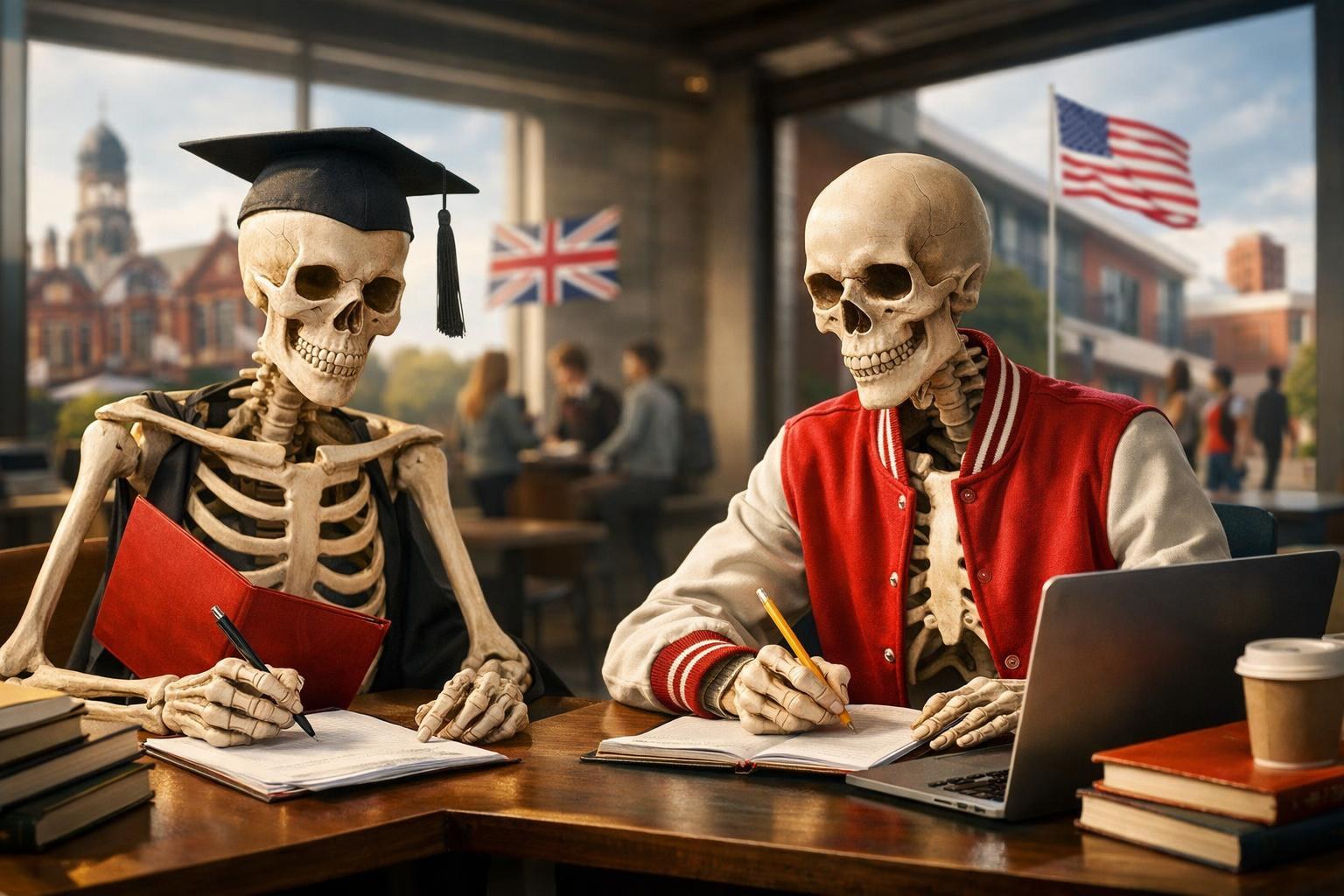
Students applying on both sides of the Atlantic often assume a personal essay is a personal essay — write once, paste twice. That assumption costs interviews. The UCAS personal statement is a single document read by every department you apply to through the central system. It must explain academic motivation, subject preparation, and intellectual curiosity in roughly four thousand characters. The Common App essay is one piece of a broader US file where activities lists, supplemental prompts, and recommendation letters carry parallel weight. UK readers want subject focus; US readers often want narrative personality that complements the rest of the file. Admissions tutors on UCAS see one statement for five course choices; American readers distribute evidence across ten or more document types.
geo differences in admissions culture shape what "good" looks like on each side of the Atlantic. British selectors expect you to sound like someone who has already been thinking like an undergraduate in your discipline — supercurricular reading, project work, honest engagement with what the course demands. American selectors frequently reward storytelling arc, voice, and reflection on identity or values, especially when supplements ask school-specific questions. A lyrical essay about overcoming hardship may strengthen a US application while weakening a UK statement that needed space for A-level physics exploration and lab experience. Currency, character limits, and interview follow-ups differ too: UCAS feeds subject-specific interviews where you must defend claims from your statement line by line.
Using one draft for both markets signals that you have not researched either system. Admissions officers recognize template structure quickly. Worse, you waste character and word limits on material the wrong reader does not score. The fix is not translation — it is re-architecture from a shared fact base, not a shared prose file. Students who merge drafts save a weekend and lose clarity that no rewrite recovers after rejection letters arrive.
UCAS structure: academic spine first
A strong UCAS statement opens inside the subject, not inside your childhood. The first third establishes why you want to study the course — linked to books, lectures, experiments, or problems you encountered beyond exam syllabi. The middle third proves preparation: projects, extended essays, competitions, work shadowing that connects to academic skills. The final third looks forward: what you hope to explore at degree level, stated with specificity about subfields or methods. Personal hardship appears only when it directly affected academic trajectory or subject choice. Every sentence should earn its place against the character ceiling.
Tone stays formal-enthusiastic. UK readers dislike breathless American marketing voice ("dream school," "perfect fit," excessive exclamation). They prefer evidence-heavy sentences and named texts or concepts. Character limits enforce discipline — there is no room for a cinematic opening scene unless it immediately pivots to subject engagement. Every paragraph should answer the silent question: "Why should we teach this applicant our material for three years?" Mention supercurriculars with outcomes: what you learned from a MOOC, not that you "enjoyed" it. Selectors reward specificity over enthusiasm adjectives.
If you use admission essay services, the brief must specify UCAS conventions explicitly. Generalist US writers default to narrative hooks and life-lesson conclusions — exactly the pattern UK tutors tell students to cut. Request a subject-led outline before anyone drafts prose. CustomWritings and similar vendors with UK-facing pages still assign mixed pools; your brief is what prevents a Common App essay with British spelling.
Common App structure: voice and reflection
The Common App personal statement allows six hundred fifty words and seven prompt options, most inviting reflection on identity, growth, challenge, or curiosity. A workable US essay often follows scene-to-insight architecture: drop the reader into a specific moment, show what you did, then articulate what changed in how you think — without summarizing your resume. The essay should sound like you speaking at your most articulate, not like a formal academic proposal. admission essay readers on the US side expect personality that matches counselor letters and activity lists — inconsistency across those files raises authenticity questions at selective schools.
Supplemental essays do part of the academic work UCAS concentrates in one file. You might explain "why this major" in two hundred words for one university and "why our community" for another. That fragmentation means your main essay can carry human dimension while short answers carry program fit. Trying to pack major-fit and subject evidence into the Common App main essay alone often produces bloated drafts that fail both goals. Treat supplements as mandatory architecture, not optional extras you draft in one sitting.
US readers tolerate more stylistic range — humor, vulnerability, nonlinear structure — when it serves insight. They punish vagueness and performative community service equally. The admission essay must still be factually yours. Outsourced drafts that invent scenes or exaggerate roles create integrity risk if a counselor or alumni interviewer probes details. Interviewers often ask about a single line from your main essay — you must own every claim.
When admission essay services help — and when they hurt
admission essay services add value when they function as coaches on structure and clarity, not as ghostwriters inventing your biography. Useful engagement starts with separate outlines for UCAS and Common App built from the same fact inventory: courses, readings, activities, goals. Each outline allocates facts differently. UCAS gets the reading list and methodology interest. Common App gets the moment you changed your mind about a belief during a summer job — if that moment genuinely happened. Coaching preserves voice; ghostwriting creates files you cannot defend in conversation.
Harm shows up when vendors sell "one personal statement package" without market split. You receive a US-style story with a paragraph about loving economics inserted for UK use. Selectors see the mismatch instantly. Always ask whether the assigned writer has placed students in your target country in the last two cycles. Portfolio samples should include both markets if they claim dual expertise. A single generic sample is a warning sign, not proof of cross-border competence.
Editing tiers outperform full ghostwriting for either system. Copy editing plus comment feedback preserves your voice — critical because US interviews and UK subject discussions will reference material in your file. If you cannot discuss an essay's claims casually, you should not submit it. PaperWriter and dissertation-focused brands rarely specialize in admissions — verify writer pool before ordering.
Building two drafts from one fact bank
Step one: list twenty facts — no prose, just bullets (grades, books, projects, jobs, questions that fascinate you). Step two: tag each fact UCAS-only, Common-App-only, or both. Step three: draft UCAS from tagged academic facts in three evenings, ignoring storytelling prompts. Step four: draft Common App from a single reflective moment that changed behavior or belief, using facts tagged for narrative use. Step five: cross-read only for contradictions, not for merge opportunities. The fact bank prevents invented overlap between two incompatible essay shapes.
Character and word limits require different cutting strategies. UCAS cuts remove adjectives before removing named evidence. Common App cuts remove redundant reflection before removing scene detail. Running both cuts on one merged draft destroys whichever system you edited last. Keep two files open side by side rather than one master document you trim twice — merged drafts always favor whichever market you edited most recently.
The goal is not two identical stories in different accents. It is two competent answers to two different questions: "Can you succeed in our course?" versus "Who are you becoming, and how does that fit our campus?" Students who respect that distinction submit sharper files on both sides. Students who merge drafts save a weekend and lose clarity that money cannot buy back after rejection letters arrive.
Compare services with real review data
Use our match tool or read ranked reviews before you order — human writers, tracked cashback on partners, and quality index scores side by side.
Related reading
More in blog
Ranking guides