
Student guides
Support Response Time: How to Test SLA Before You Pay
Pre-sales chat speed predicts post-sales behavior. Run a two-question probe before checkout.
Updated June 2026
Pre-sales probes that work
Pre-sales chat is a free stress test most students skip because they assume all support teams behave like the smiling avatar on the homepage. Run two deliberate questions before any payment: one about citation style tied to your actual syllabus, and one about revision timing if delivery arrives six hours late. Note the timestamp when you send each message and when a human—not a bot script—answers with specifics. Vendors chasing conversions answer precisely; vendors chasing volume paste generic reassurance that could apply to any assignment on earth. Probes cost nothing but reveal whether support reads briefs or only reads conversion scripts. Record whether replies arrive during your normal study hours rather than only when sales teams are incentivized to respond quickly.
Avoid bait questions that any intern can deflect, such as are you legit or do you plagiarize. Instead ask operational questions that require reading your brief: Can your writers use AGLC fourth edition footnotes for this case note outline? If support responds with we guarantee quality without referencing AGLC, you learned something valuable about writer matching and attention. Save the chat transcript; it becomes evidence if post-sales support contradicts pre-sales promises. Export before the session times out. Include a line from your syllabus in the question so later disputes can show the agent saw real requirements and still answered vaguely. Pre-sales clarity on niche formatting requirements often predicts whether writer matching will respect discipline-specific constraints after checkout.
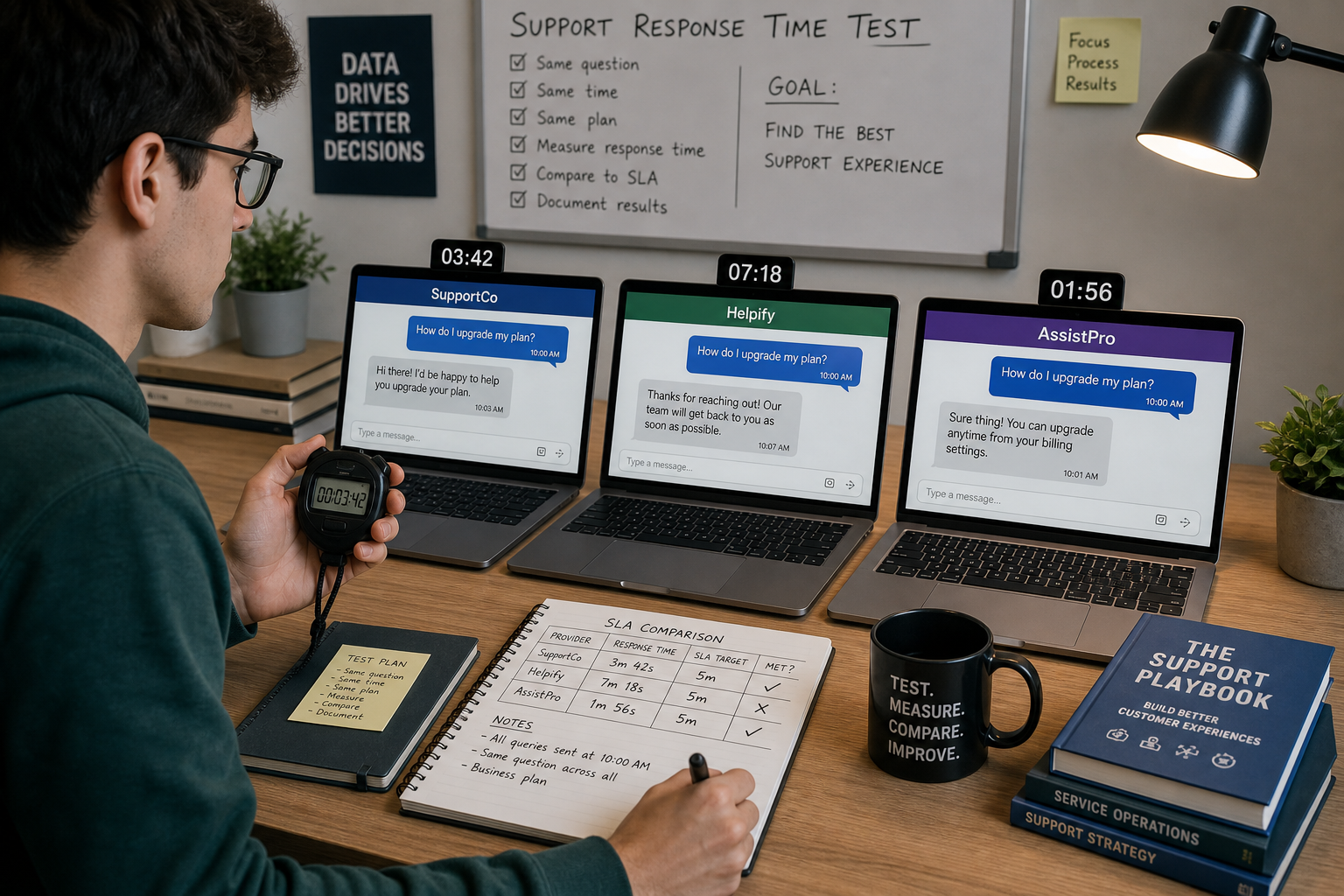
Run the same probe on two or three shortlisted sites within the same hour so timezone and staffing variables stay comparable. Use identical wording. Spreadsheet the response times and answer quality scores. Ten minutes of structured testing often reveals more than an hour reading affiliate reviews written by people who never opened live chat. Your spreadsheet becomes part of your vendor dossier for the term. Repeat probes at different hours once if your deadline cluster falls outside normal business time; staffing curves are not flat across the clock. A second probe week mid-semester costs ten minutes and catches staffing changes homepages never advertise.
Timezone and coverage maps
Twenty-four-seven support rarely means writers and supervisors awake in your timezone. It often means a tier-one agent in one region acknowledges tickets while escalation sleeps elsewhere. Ask directly which hours quality managers review revision disputes and whether your deadline falls inside or outside that window. A platform strong for US Eastern time may leave Australian students hanging during their final pre-deadline hours. Coverage maps should name regions, not just hours on a clock. Request written confirmation of which timezone governs dashboard deadlines so you are not arguing lateness across three interpretations. Vendors who publish coverage schedules with named regions tend to resolve timezone disputes faster than those listing generic twenty-four-seven badges.
Holiday coverage blind spots cause predictable disasters. Test support the week before major holidays in the vendor's stated headquarters country, not only during normal mid-semester weeks. Reduced staffing shows up as longer gaps between bot handoff and human reply. If your assignment due date overlaps Thanksgiving, Lunar New Year, or European summer slowdowns, build extra revision buffer or choose a vendor whose coverage map matches your crunch period. Calendar awareness beats hoping someone is awake. Mid-semester probes during quiet weeks mislead students who then pay before finals when queues triple. If holiday probe replies arrive late by an hour or more, treat that slack as your revision buffer during actual holiday orders.
Document the timezone printed on dashboard timestamps versus your local clock. Misaligned clocks create he-said-she-said lateness disputes. Screenshot a dashboard status line alongside your system clock in one image if possible. Support teams that cannot explain their timezone conventions will struggle to adjudicate deadline breaches fairly when you need them most. Ask them to confirm deadline in both UTC and your local zone in writing. Store that confirmation next to your checkout screenshot so every party references the same deadline anchor. Aligning dashboard clocks before the first order prevents exhausting goodwill on disputes that were really calendar misunderstandings.
Quality vs speed
Fast replies matter less than accurate replies. A support agent who responds in ninety seconds with copy-pasted policy text may be worse than one who takes eight minutes but confirms writer availability for your niche subject. Score pre-sales interactions on whether the answer referenced your uploaded materials, cited internal policy correctly, and set realistic expectations about turnaround. Speed without substance predicts rushed writer assignment after payment. Paste-and-go answers are automation wearing a headset. Agents who never ask clarifying questions about your rubric are usually preparing to assign whoever is online, not whoever fits. Agents who quote internal routing numbers and named review stages usually sit on platforms with accountable supervision chains.
Watch for language hedging: usually, typically, should be fine. Operational support for deadline-critical services should state concrete processes—writer assigned within X hours, supervisor notified at Y delay threshold. Vague optimism disappears once money clears. Prefer vendors whose agents ask clarifying questions rather than immediately offering discounts to close the sale. Discounts offered before scope clarity are red flags disguised as generosity. A ten percent coupon before the agent reads your brief is a sales tactic, not a sign they understand your order. Specific timelines convert marketing optimism into operational commitments you can reference when delivery slips.
Quality signals also appear in follow-through. Send a third message referencing something the agent promised and ask for confirmation in writing. Agents who lose thread context or contradict earlier statements foreshadow post-order chaos. The best pre-sales experience feels boring: checklist-driven, specific, slightly conservative on promises. Boring support is what you want when a deadline is forty-eight hours away. Contradictions between chat agents on the same day suggest training gaps that worsen after payment when incentives shift from conversion to cost control. Agents who reference prior messages without asking you to repeat your brief show ticket systems worth trusting during writer silence.
Escalation path tests
Before paying, ask how to escalate if your assigned writer stops responding. Tier-one chat should name the next step—supervisor ticket, phone callback, billing hold—not we will look into it. Request the escalation email or ticket category label and screenshot the answer. When silence hits at hour thirty-six before deadline, you will skip panic guessing and open the correct queue immediately. Knowing the label saves hours of misrouted tickets. Escalation paths that require phone calls during your sleep hours are a hidden cost for international students. Clear escalation labels reduce the panic tax when you are forty-eight hours from upload and nobody has answered writer messages.
Some platforms hide escalation behind logged-in dashboards only visible after purchase. Ask whether pre-payment customers can access dispute forms or whether escalation requires an active order ID. If escalation unlocks only post-payment, factor that opacity into risk scoring for high-stakes orders. Repeat vendors may accept the friction; first-time thesis deposits deserve clearer paths. Opacity before payment rarely improves after money moves. Dashboard-only dispute forms that lack email confirmation create gaps when accounts lock during chargeback fights. Platforms that explain pre-payment dispute limits honestly deserve higher trust scores than those promising everything before the card clears.
Test whether support can reassign writers mid-order and how long reassignment takes. Writer illness happens; platforms without reassignment SLAs leave you hostage to one silent account. A specific answer—reassignment within four hours during business days—beats a promise that your writer is a professional. Capture it in the same transcript folder as your terms screenshots. Reassignment SLAs belong in your scoring matrix trust row. Ask whether reassignment preserves your original deadline or resets the clock; some platforms quietly extend deadlines while blaming writer change. Written reassignment timelines protect you from vague reassurances that sound professional until the deadline passes.
SLA red flags
Treat these pre-sales patterns as stop signals: chat closes when you ask for refund clause citations, agents push payment links before answering operational questions, or response quality collapses after you mention your university deadline date. Some systems deprioritize tickets once agents sense hesitation. That behavior rarely improves after checkout. Agents who rush payment before scope confirmation are measured on conversion, not your grade. Chat windows that end abruptly when you paste terms questions suggest supervisors train agents to avoid documented promises. Behavior that worsens when you mention deadlines usually reflects queue routing, not random agent mood.
Automated loops that repeat three similar answers without human takeover indicate understaffed support masquerading as AI efficiency. Bot-first triage works for password resets, not for citation-specific writer matching. If you cannot reach a human within thirty minutes during advertised business hours, assume post-sales waits measured in half-days. Bot loops that never escalate are worse than slow humans. Three identical bot replies with different emoji are still failure, not progress toward a human who can assign a law specialist. Human takeover within one business hour should be your minimum bar when questions involve writer assignment or refund clause text.
Finally, distrust perfect five-star support stories on review sites that never mention wait times. Independent student forums with timestamped complaints often reveal SLA reality better than curated testimonials. Combine your live probe results with recent third-party reports. When both align poorly, pay elsewhere—even if the discount expires tonight. Expiring coupons cost less than missed deadlines and chargeback stress combined. Your probe spreadsheet is primary data; testimonials without timestamps are marketing residue. When probe data and forum timestamps align on slow support, treat discount urgency as noise rather than reason to skip homework.
Compare services with real review data
Use our match tool or read ranked reviews before you order — human writers, tracked cashback on partners, and quality index scores side by side.
Related reading
More in blog
Service reviews
Ranking guides