
Student guides
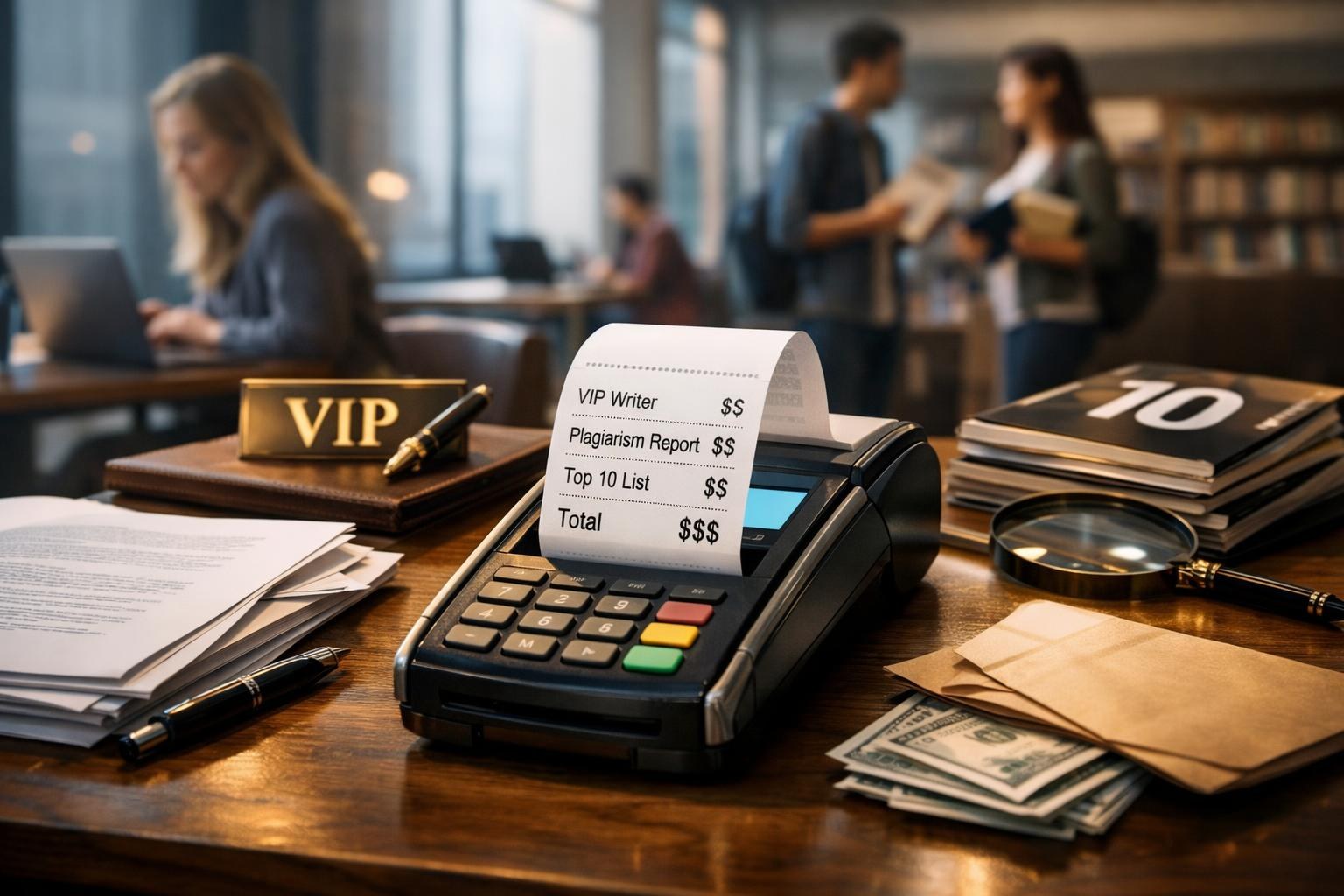
Hidden Checkout Fees: VIP Writers, Plagiarism Reports, and «Top 10» Upsells
Checkout pages hide the real price behind VIP writers, plagiarism upsells, and pre-checked add-ons. Here is what each toggle actually buys.
Updated July 2026
Calculator fiction and checkout reality
Essay sites train you on a calculator that shows a clean subtotal. You enter pages, level, deadline — the number feels decisive. The checkout page introduces a second pricing layer: toggles pre-enabled for VIP support, plagiarism reports, preferred writer pools, and sometimes abstract or outline lines that were not visible on step one. Students who rush payment confirm upsells they never priced consciously. The gap between calculator and invoice is not accidental; it is conversion design. Treat step one as a teaser and step two as the real quote. Thin base margins explain why toggles appear at step two.
pricing models that advertise transparency still rely on optional tiers because base margins are thin. Platforms compete on headline rates, then recover margin at checkout. Understanding that structure lets you strip defaults without guilt — and add back only what your assignment actually needs. The calculator is step one of a funnel; checkout is where margin lives. Knowing that reframes unchecking boxes as smart shopping, not missing out on quality you never defined. Rush plus upsell stacking is common on Sunday-night checkout screens. Itemized screenshots protect you when support disputes unchecked toggles.
SpeedyPaper and similar rush-friendly brands often show urgency multipliers beside upsells simultaneously, compounding sticker shock. Build the cart slowly once; screenshot the itemized list before paying so support cannot dispute what you unchecked later. Studdit and EssayWriter use similar toggle patterns — compare stripped totals across three carts before assuming one site is cheaper. Rush multipliers and upsells stack multiplicatively on some carts, not additively. VIP labels without criteria are routing fees, not talent guarantees.
VIP writers and Top 10 tiers demystified
"VIP writer" and "Top 10 writer" labels imply elite talent set apart from the general pool. Reality varies by platform. On some sites, tiers gate access to writers with higher internal ratings and lower simultaneous order loads — meaningful for complex topics. On others, tiers are largely routing flags: the same writer pool receives orders with a priority queue bump. Without platform-specific proof, you are buying a label. Ask for criteria before paying a thirty-percent premium on faith alone. Opaque Top 10 criteria are a signal to test standard tier first. Preferred-writer fees stack on VIP tiers more often than buyers expect.
Ask pre-sale: "What objective criteria place a writer in Top 10?" Legitimate answers cite completion rate, revision frequency, subject tests, or years on platform. Vague answers cite "quality assurance." If the upgrade costs thirty percent more but criteria are opaque, test standard tier on a low-stakes order first. One test order costs less than a failed capstone upgrade gamble. Document the answer in your order thread if you upgrade anyway. Guarantee language lives in terms, not beside pre-checked boxes.
Preferred writer selection — choosing a named writer from past orders — often bills separately from VIP tiers. Students double-pay for loyalty features they confuse with quality guarantees. Read whether your favorite writer is available for your deadline before upgrading both VIP and preferred flags. Availability matters more than labels when the clock is six hours and your preferred writer is already booked on three rush orders. Vendor scanners and campus tools use different source databases. False-negative vendor reports still fail Turnitin when databases differ.
Plagiarism report upsells versus free checks
Paid plagiarism reports promise Turnitin-style similarity scores bundled with delivery. Value depends on what you already have. Many universities give students similarity tools through LMS accounts. Free tiers on Copyleaks or Plagscan cover spot checks. Paying twelve dollars for a report that repeats what you could run yourself is pure margin for the vendor — unless the report comes with a human review memo you need for documentation. Chart and slide lines surprise STEM buyers who assumed inclusion.
Some upsell reports use proprietary scanners that do not match your professor's tool, creating false confidence. A clean vendor report does not guarantee a clean Turnitin submission if source databases differ. Treat purchased reports as one input, not clearance to skip reading the paper. Database mismatch is a common false-negative trap on budget tiers that students discover only after submission, when support cites disclaimer language you never read. SMS fees rarely help if you will not read messages before deadline. Deliverables lists reveal chart and slide gaps before you pay.
contract clauses students should screenshot include language about plagiarism guarantees — what happens if similarity exceeds a threshold, who pays for rewrite, and whether the report fee is refundable when flagged. Upsell pages rarely link to that policy; terms of service do. Capture both before checkout. Guarantee language lives in terms, not beside the checkbox you clicked in a hurry. Rebuild one cart slowly so each toggle has a named purpose.
Support packages and formatting line items
Priority support, SMS updates, and extended revision windows appear as monthly or per-order fees. Useful when your deadline is tonight and you need reassignment fast. Useless when your deadline is next week and you check email daily anyway. Match support tier to communication cadence you will actually use. Paying for SMS alerts you ignore is margin, not protection against a missed deadline. Section fees punish students who assume one line item covers everything. TOP 100 rankings measure process; stripped carts measure your discipline.
Formatting upsells — PowerPoint slides, speaker notes, charts — bill per unit. A research paper order may exclude figures unless you add a "charts" line. STEM and business assignments suffer surprise gaps when students assume visuals are included in page count. Read the deliverables list line by line before confirming payment. A five-page paper with mandatory figures may need three add-on lines you never saw on the calculator. Five minutes of checkout review often saves forty dollars plus a dispute.
Progressive delivery charges per section on long orders. Helpful for fifteen-page papers where you want milestone approval; wasteful for three-page essays where coordination overhead exceeds benefit. Itemize each line against your rubric before confirming payment. Every unchecked default is a bet that you will not need that feature — and bets lose often under rush when you discover missing deliverables at delivery. Rankings inform reputation; stripped carts reveal true price.
Strip smart, spend deliberately
Default workflow: uncheck everything, rebuild quote from zero, add back one tier at a time while asking "does this change writer match or only marketing?" Keep plagiarism reports off if you will run university tools. Keep VIP off on simple prompts. Add Top 10 or specialist tier when subject is niche or stakes are high. Rebuild slowly once per vendor so you know exactly what each toggle costs.
Compare stripped totals across three vendors using identical scope — then consult independent lists like TOP 100 rankings for process quality, not for checkout defaults. Rankings measure reputation; checkout toggles measure your discipline. A highly ranked service with aggressive upsells may still cost less stripped than a unknown site with fewer toggles but weaker writers. Checkout review is cheaper than midnight support fights.
Hidden fees are only hidden if you pay without reading. Students who treat checkout like a contract review — screenshot itemized totals, map add-ons to deliverables, save guarantee language — rarely feel ambushed. The upsell economy assumes you will not do that work. Doing it takes five minutes and often saves forty dollars plus a support argument you do not have time to win at midnight.
Compare services with real review data
Use our match tool or read ranked reviews before you order — human writers, tracked cashback on partners, and quality index scores side by side.
Related reading
More in blog
Service reviews
Ranking guides