
Independent review · 2026
Qwen Chat Review
Qwen Chat scores 7.9 for essay fit — a genuinely strong multilingual tool from Alibaba that handles Asian-language academic registers better than most free alternatives, with a reasoning variant (QwQ) that competes with paid tools on structured analysis, but an English writing persona that can feel slightly corporate and a web interface that prioritizes Chinese-market users in ways international students sometimes find jarring.
qwen.ai · #14 in TOP 50
Regional engine
Qwen 2.5 Max · QwQ
Our verdict
Qwen Chat scores 7.9 for essay fit — a genuinely strong multilingual tool from Alibaba that handles Asian-language academic registers better than most free alternatives, with a reasoning variant (QwQ) that competes with paid tools on structured analysis, but an English writing persona that can feel slightly corporate and a web interface that prioritizes Chinese-market users in ways international students sometimes find jarring.
Overview
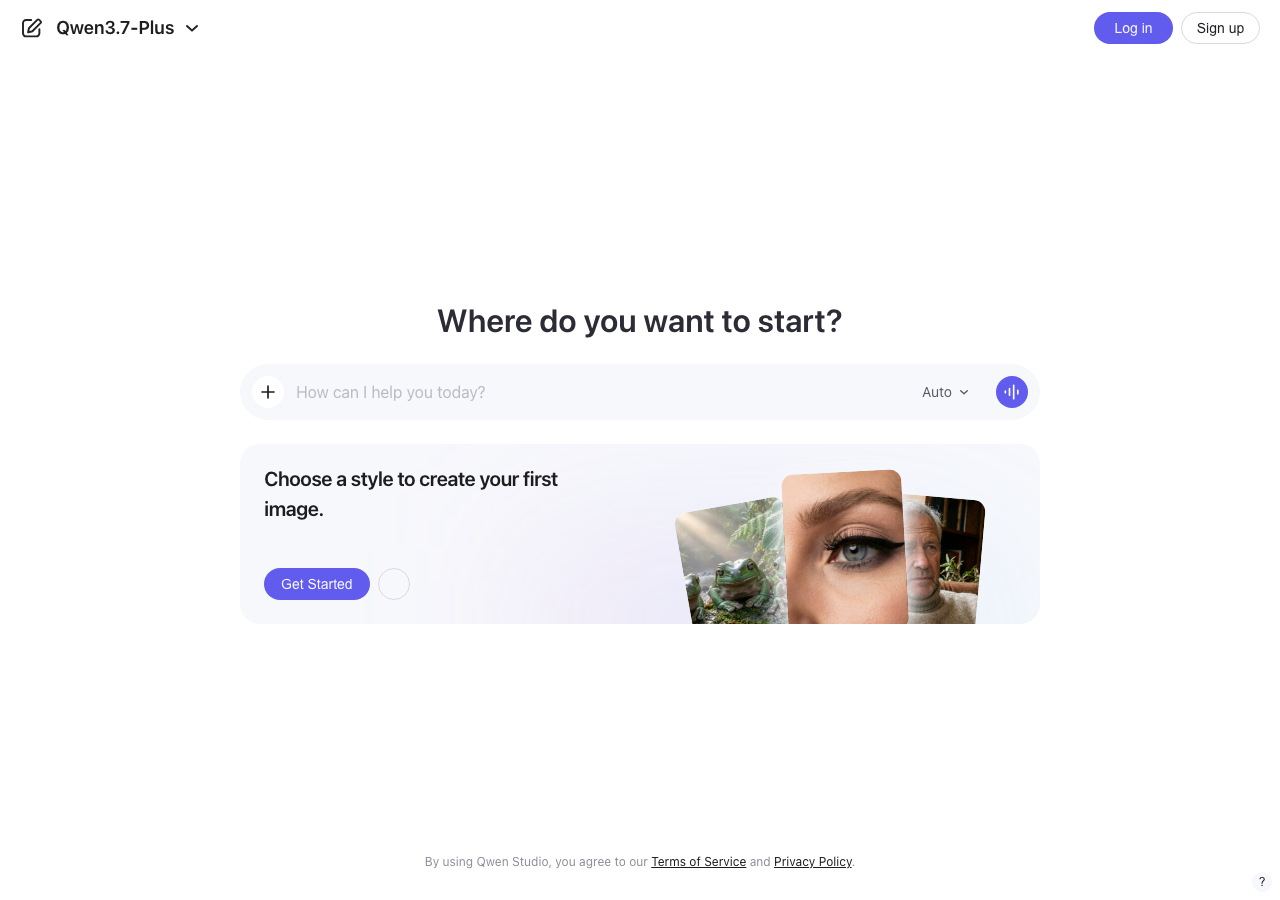
Alibaba's Qwen family of models occupies a specific niche in the global AI landscape: frontier-class multilingual systems built with deep Chinese-language capability but also strong enough in English and other Asian languages to serve international academic users. Qwen Chat at chat.qwen.ai is the consumer access point, and in 2025–2026 it became a go-to tool for students in Southeast Asia, mainland China, Hong Kong, Taiwan, and diaspora communities studying abroad who found that Western tools handled their bilingual academic workflows awkwardly.
The Qwen 2.5 Max model is the current headline, and it is a serious piece of work. Benchmarks across multiple institutions put it in the top tier of publicly accessible models on reasoning and instruction-following tasks. For students, that academic benchmark performance translates to practical benefits: Qwen produces more logically structured argument flows than some competitors, handles technical vocabulary across disciplines with reasonable accuracy, and does not collapse into incoherence on long prompt chains the way smaller models do. The QwQ reasoning variant adds another level for complex analytical tasks.
The honest limitation is that this tool was built primarily for a Chinese-speaking market and has been internationalizing as a secondary objective. The English interface at chat.qwen.ai is functional but less polished than the experiences native English-speaking students get from ChatGPT or Claude. Occasional translation artifacts in the UI, slower rollout of features for non-Chinese locales, and a prose style in English that reads slightly formal-corporate rather than academically natural — these are real frictions, though none are disqualifying for a student willing to work around them.
Qwen 2.5 Max is the model students access through the web interface, and the gap between this and the models behind free Western competitors is smaller than many users expect. On structured essay tasks — analytical argument construction, comparative analysis, literature review synthesis — the output quality is competitive with ChatGPT Free and in some structured prompting scenarios outperforms it. The QwQ reasoning variant, accessible through the model selector in the interface, approaches the quality of paid reasoning models like o4-mini on logic-heavy prompts.
The multilingual range is the standout feature. Qwen was trained with exceptional depth in Simplified Chinese and Traditional Chinese, strong capability in Japanese and Korean, and above-average performance in Southeast Asian languages including Thai, Vietnamese, and Bahasa Indonesia. For students who work across these languages — either because they are studying in their non-native language or because their sources include non-English academic literature — Qwen provides a genuinely unified bilingual workspace rather than a translation layer bolted onto an English-first system.
Essay fit at 7.9 reflects this multilingual strength against the English prose quality gap. On pure English academic writing tasks with no cross-language component, Qwen trails Claude Free and matches Meta AI roughly. On bilingual and multilingual tasks, it leads the free tier substantially. The score represents the weighted average of its use cases — if your specific workflow is monolingual English, adjust your expectations slightly downward; if it involves Chinese-English or Japanese-English academic writing, adjust upward.
The interface at chat.qwen.ai includes model switching, conversation history, and file upload capability. Longer context windows are available on the paid tier, but the free tier provides sufficient context for most undergraduate papers. Web search integration is available in some configurations, enabling source grounding without requiring a separate Perplexity session for fact-checking. This combination — strong reasoning, multilingual capability, partial web grounding, free access — explains why Qwen's popularity among international students grew rapidly through 2025.
Multilingual academic workflows
The most distinctive Qwen workflow for academic use involves drafting in your thinking language and finalizing in your submission language. A student whose analytical comfort language is Japanese but who submits in English can outline their argument in Japanese, ask Qwen to critique the logical structure in Japanese, then request the English draft with explicit instructions about the submission context. The translation fidelity between academic registers in Japanese and formal English is better here than on tools without equivalent Japanese training depth.
Chinese-to-English workflows are Qwen's strongest bilingual combination. The academic Chinese register — formal, structured, argument-driven — translates into English that requires less cleanup than outputs from models that handle Chinese as a secondary language. Students in Chinese universities who are preparing publications or conference submissions in English find this capability practically valuable. Students writing Chinese-language assignments directly find Qwen more helpful than any other tool in our rankings at this essay score range.
Cross-lingual source synthesis is another practical advantage. If your assignment requires engaging with both English and Chinese scholarship — common in East Asian studies, comparative politics, and international economics courses at research universities — Qwen can help you understand and synthesize Chinese-language sources alongside English ones without the context switch to a separate translation tool. The summaries are good enough to use as working notes, though verification against your own reading remains important for high-stakes papers.
The limitation in multilingual workflows is Korean and Vietnamese, where the training depth drops compared to Chinese and Japanese. Responses in Korean handle everyday academic tasks adequately but show more errors on specialized vocabulary and complex sentence structures. Students for whom Korean is the primary academic language will find HyperCLOVA X more tailored to their needs, though Qwen remains a useful secondary tool.
QwQ reasoning mode and analytical tasks
QwQ is Qwen's reasoning variant — a model that works through problems step by step before producing a response, similar to OpenAI's o-series reasoning models. Activating QwQ for complex essay tasks produces noticeably different outputs than standard Qwen: it builds argument structures more carefully, catches logical inconsistencies in your thesis before reinforcing them, and produces counterarguments that are more substantive than the often-generic opposition paragraphs that standard mode generates.
The practical use case for QwQ is any essay with a genuine analytical challenge: a legal case analysis requiring multi-step reasoning through precedents, a philosophical ethics paper requiring careful delineation between competing frameworks, an economics paper requiring identification of causal chains in a policy argument. For these tasks, QwQ at zero cost is a notable achievement. The comparable paid tools — o4-mini in ChatGPT Plus, advanced Sonnet in Claude Pro — produce better results, but the QwQ gap to those paid tools is smaller than you would expect from a price comparison.
QwQ takes significantly longer to respond on complex prompts. Two to four minutes for a full essay structure analysis is common. Plan your workflow accordingly: submit the analytical prompt, step away, and return to a reasoned response rather than watching a progress indicator. The wait is generally worth it for tasks where logical structure is the core challenge.
English prose quality and editing
The honest critique of Qwen's English output is that it tends toward a corporate-formal register that reads correctly but not naturally in academic prose. Constructions like 'it is imperative to consider,' 'this analysis necessitates an examination of,' and elaborate multi-clause sentences that pack more argument into one grammatical unit than English academic style typically recommends — these are Qwen English fingerprints that instructors in humanities departments may recognize. The fix is systematic editing prompts.
Effective prompts for normalizing Qwen English include: 'Rewrite for a North American academic audience — clear analytical prose, sentences under 25 words where possible, no nominalized verbs, active voice throughout.' This kind of explicit stylistic instruction produces substantially better output than accepting the first-pass English draft. Adding a specific style instruction upfront when requesting an essay draft saves the editing round: 'Write the following essay in a clear, direct analytical style appropriate for [course name] at [institution type].'
For ESL students who are working to improve their English academic writing alongside using AI tools, Qwen's formally correct if stilted English actually serves a useful learning function. The grammatical correctness without natural idiom is a recognizable stage in developing English academic prose, and studying the structural patterns — where Qwen places topic sentences, how it builds from claim to evidence to interpretation — provides useful scaffolding even where the surface-level word choice needs improvement.
Practical limitations and data privacy
The web interface is available internationally without a VPN, which distinguishes Qwen from some other Chinese-market AI products. Account creation is straightforward. However, the interface notifications, help content, and error messages default to Chinese in some configurations, which is a minor friction for non-Chinese-reading users that requires navigating settings to resolve.
Like Kimi, Qwen operates under Chinese legal frameworks that include different data access provisions than GDPR or US privacy law. For general academic writing assistance, this is a background consideration rather than a daily concern. For students working on topics that could be considered politically sensitive under Chinese information law — Taiwan, Tibet, Hong Kong, Xinjiang politics, criticism of Chinese government policy — the data handling context is relevant and worth considering explicitly before submitting prompts.
The free tier's context window is adequate for single essays but becomes a limitation for multi-document research workflows. The paid Qwen Plus tier expands context and adds priority access, but the pricing structure as of 2026 is credit-based rather than subscription-based, which some students find opaque. Understanding the credit model before committing saves billing surprises.
Bottom line
Qwen Chat's 7.9 essay fit score reflects a tool that meaningfully outperforms the free-tier average for the specific use cases it was built for — multilingual academic writing, structured analytical reasoning via QwQ, and Chinese-language essay production — while falling slightly short of the most capable free English-first tools when the task is straightforward English-only writing.
The student profile that benefits most from Qwen: Chinese-speaking students studying in English, Southeast Asian students writing in mixed-language academic environments, and any student whose coursework involves engagement with Chinese-language scholarly sources. For these students, Qwen is not a compromise choice — it is genuinely the best free option for their workflow.
For students whose needs are primarily English-language essay drafting with no multilingual component, Claude Free or the reasoning tier of ChatGPT Free may provide a more natural English writing experience. But anyone dismissing Qwen as a regional tool without exploring QwQ's reasoning capability and the bilingual workflow advantages is missing a genuinely strong free option.
Pricing
- Qwen Chat has a free tier or free product access — rate limits and model caps apply; paid upgrades may exist on qwen.ai.
- Flagship stack: Qwen 2.5 Max · QwQ. Features and model names change; verify before you subscribe.
Models & access
Qwen 2.5 Max · QwQ. Availability, rate limits, and regional restrictions change — confirm on qwen.ai before subscribing.
Compare alternatives
Who it's for
- Switch to the QwQ reasoning model for analytical tasks requiring multi-step logic — argument planning, ethics comparisons, causal chain analysis — and budget two to four minutes for the response
- Draft argument outlines in your thinking language first; ask Qwen to critique them before requesting the final English draft for cleaner translated reasoning
- Add explicit English style instructions upfront: 'clear, direct, active voice, sentences under 25 words' significantly improves default English output quality
Student experiences
Ratings from students who used Qwen Chat on real assignments — includes critical reviews.
Loading student reviews…
1,723 words · Updated 2026