
Independent review · 2026
Perplexity Pro Review
Perplexity Pro is the one AI subscription students should consider if their essays live or die on citations — essay fit 8.7/10, $20 a month, and the only consumer product in this ranking where every substantive factual claim comes with a linked source you can click open in thirty seconds. The model backend rotates across GPT-4.1, Claude, and Gemini depending on query type, so you get frontier-class prose quality; what Perplexity adds on top is a search layer that retrieves real web pages before generating, attaching numbered inline citations the way a properly formatted research brief should look. It is not a substitute for a library database subscription — it cannot see behind JSTOR or Elsevier paywalls — but for open-access research, policy documents, and current-events essays, it compresses a two-hour source-gathering session into fifteen minutes of verifiable output.
perplexity.ai · #4 in TOP 50
Search + citations
GPT-4.1 · Claude · Gemini mix
Our verdict
Perplexity Pro is the one AI subscription students should consider if their essays live or die on citations — essay fit 8.7/10, $20 a month, and the only consumer product in this ranking where every substantive factual claim comes with a linked source you can click open in thirty seconds. The model backend rotates across GPT-4.1, Claude, and Gemini depending on query type, so you get frontier-class prose quality; what Perplexity adds on top is a search layer that retrieves real web pages before generating, attaching numbered inline citations the way a properly formatted research brief should look. It is not a substitute for a library database subscription — it cannot see behind JSTOR or Elsevier paywalls — but for open-access research, policy documents, and current-events essays, it compresses a two-hour source-gathering session into fifteen minutes of verifiable output.
Overview
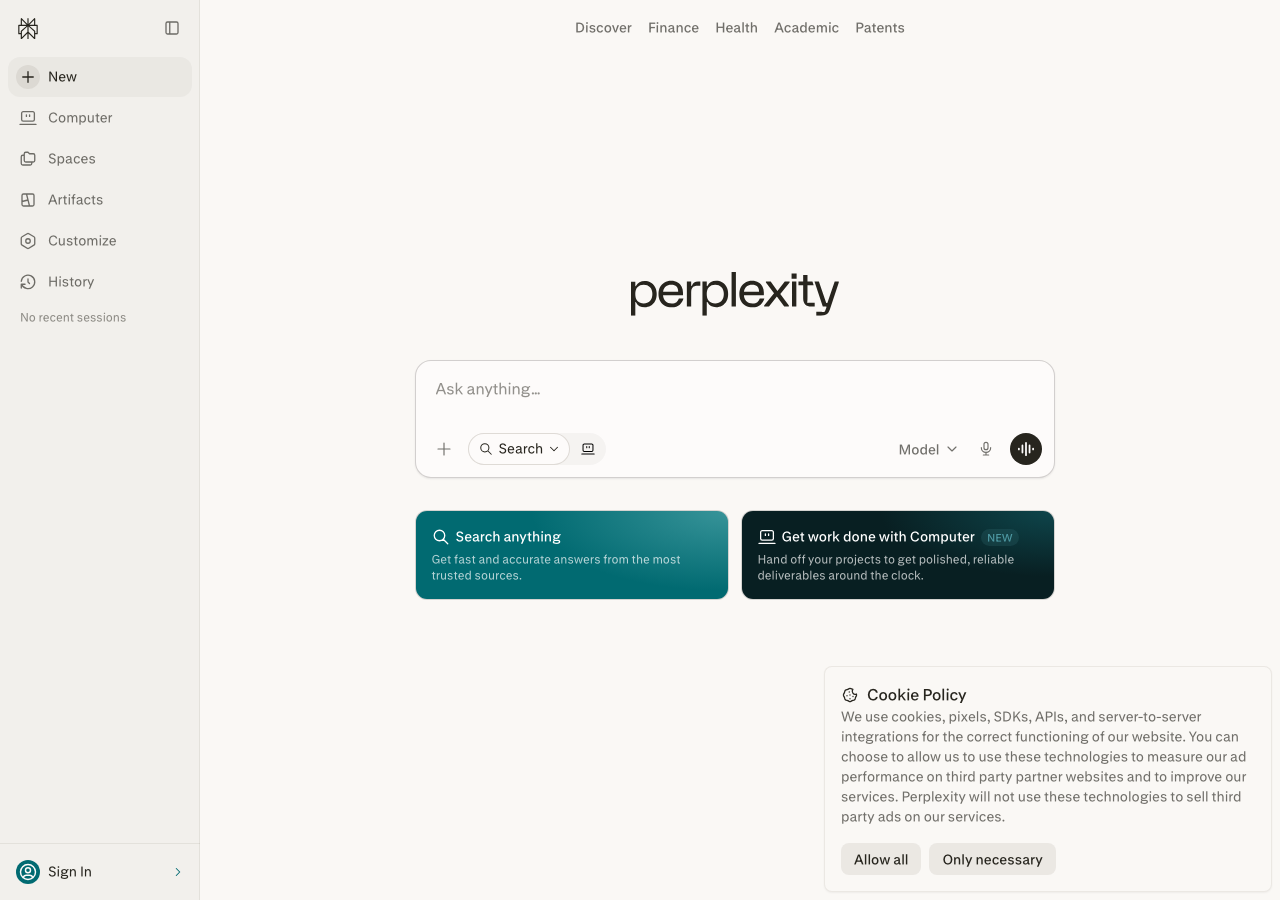
Perplexity entered 2025 as the product that actually made real-time cited AI answers work at scale, and its Pro tier reflects a deliberate bet: students and researchers need sources, not just text. The $20 monthly subscription unlocks priority query volume, access to more capable models in the backend mix, and Pro-only features like file analysis, image generation, and unlimited use of the Deep Research agent that runs multi-step research tasks autonomously. Standard Perplexity Free runs the same citation architecture but on slower models with daily limits that cap out during finals week.
Student opinion on Perplexity Pro divides cleanly by workflow type. Students who routinely need to support claims with specific sources — law, public policy, journalism, history of science — describe it as the most time-efficient research tool available and worth the price independently of any other subscription. Students in theory-heavy humanities, where the sources that count are behind paywalls or need close textual reading, find Perplexity Pro less useful because the citations it can actually retrieve are necessarily public-web only. The ESL angle is also positive here: cited output gives non-native writers a scaffold to build around rather than a polished paragraph to paste, which produces more defensible final work.
Perplexity Pro sits at rank #4 in our AI engines list not because it writes the most beautiful prose — Claude Pro edges it there — but because it solves a problem the other engines do not: it tells you where the information came from. Every answer in search mode is a numbered citation list attached to inline superscripts in the text, and those citations are real URLs you can open in your browser right now. The hallucination profile is not zero, but it is structurally different from ChatGPT or Claude in chat mode: Perplexity can retrieve a real source that contains incorrect information, but it is far less likely to invent a source that does not exist.
The rotating backend model strategy — Perplexity uses GPT-4.1, Claude Sonnet, Gemini Pro, and its own Sonar models depending on query type and Pro status — means you are not betting on a single AI provider's writing quality. In practice the prose quality from Perplexity Pro responses is competitive with any single subscription at the $20 tier. You do not pick the backend explicitly on most queries, but Pro subscribers can select models for specific requests when they want a particular output style.
The practical limitation to communicate clearly: Perplexity Pro is a research and draft-scaffold tool, not a full essay co-author. It generates well-cited research summaries that need to be substantially synthesized and rewritten into your own argument. If you take a Perplexity answer and submit it — citations and all — you have not written an essay; you have submitted a formatted search result. The tool's design philosophy is 'give you grounded information to work with' rather than 'write your essay for you,' which is actually the more academically defensible mode of AI assistance, assuming you do the work of synthesis and original argumentation yourself.
Compared with Gemini Advanced's Deep Research, Perplexity Pro's Sonar-backed searches update more frequently and handle real-time news better. Compared with NotebookLM, Perplexity works with the live web rather than documents you upload, making the two complementary: upload your professor's required reading list to NotebookLM, use Perplexity Pro to find additional cited sources around those readings.
How the citation layer works in practice
The Perplexity Pro citation workflow that actually helps student research runs as follows: write a research question as your query, set the Focus to 'Academic' or 'Web' depending on whether you want open-access academic content specifically, and read the response with the citation numbers as your primary output, not the prose. Click every citation you plan to use in your essay. Read enough of the source page to confirm the claim Perplexity attributed to it is accurate. Add the source to your working bibliography. Repeat. The prose Perplexity generates around the citations is a helpful synthesis scaffold, but your essay argument needs to come from your reading of the actual sources.
Academic Focus mode prioritizes Semantic Scholar, PubMed, arXiv, SSRN, and similar open-access repositories. Coverage is strongest in STEM fields and social sciences with active preprint cultures — computer science papers on arXiv, economics working papers on SSRN, biomedical preprints on PubMed. Humanities scholarship is less consistently available because much of it lives behind JSTOR, which Perplexity cannot access. The workaround is to use Perplexity to identify which authors and papers are relevant to your topic, then find those specific papers through your library's JSTOR subscription independently.
Perplexity's Deep Research agent, available on Pro, runs a more extensive version of this process autonomously: it generates a research plan, runs multiple searches, synthesizes across sources, and returns a formatted report with a full citation list. Reports take two to five minutes and can run to several thousand words. The quality is excellent for empirical policy questions, scientific topic overviews, and comparative analysis. They are less useful for close-reading literary assignments where the 'sources' are primary texts needing interpretation rather than factual synthesis.
Essay drafting quality beyond citation
Once source gathering is handled, Perplexity Pro can help draft essay sections if you treat it as a writing assistant rather than a citation engine. The model selection at Pro tier — rotating through GPT-4.1 and Claude class quality — produces prose that is structurally sound and clear, if not as stylistically distinctive as Claude Pro at its best. Ask Perplexity to 'write a 400-word analytical paragraph integrating these three cited sources around the thesis that...' and you will get a workable draft passage that at least references real papers you have already verified.
The tone risk is the same as any frontier AI: Perplexity defaults to objective summary language that can sound like a Wikipedia article rather than an argued essay. Introductions generated without specific voice instructions come out academic-neutral rather than intellectually engaged. The fix — as with all engines — is in the prompt: 'Write in the argumentative first-person voice expected in a graduate seminar paper, not encyclopedic summary style.'
Turnitin AI detection applies equally to Perplexity-drafted text as to any other model. The citation structure in Perplexity output does not make the prose undetectable — it makes the factual claims checkable, which is a different and genuinely useful property. The stylistic fingerprint of AI-assisted prose remains regardless of whether it carries footnotes.
Pricing and comparison with free tier
Perplexity Free is meaningfully useful — the citation architecture works on the free tier with a slower model backend and daily usage limits. For students who need occasional cited research sessions, Free handles the job with some patience. Pro is worth the $20 upgrade in three specific conditions: your research load is high enough that daily limits throttle you during busy periods; you want to use Deep Research for literature-style reports; or you need the model selection options to get higher prose quality on specific tasks.
Compared with other $20 subscriptions: Perplexity Pro is the only option in this tier that makes source traceability its core design principle. If you pay $20 to ChatGPT Plus and separately need cited sources, you are doing two things at once — using Plus for prose and separately checking Google Scholar. Perplexity Pro collapses those into one tool for research-heavy workflows. If your essays require minimal citation scaffolding, Claude Pro or ChatGPT Plus likely offers more drafting versatility per dollar.
The subscription is monthly with no annual commitment required; cancellation is clean. There is no documented student discount on the consumer tier as of 2025–2026, though academic institution pricing exists for enterprise deployments.
Bottom line
Perplexity Pro earns rank #4 by being the most intellectually honest consumer AI subscription: it shows you where it got the information and invites you to check. Essay fit 8.7 reflects strong research-scaffold quality with the caveat that the prose layer needs more human revision than Claude Pro or ChatGPT Plus to become a genuine argument rather than a formatted summary.
The ideal student use case is research-first courses — policy analysis, empirical social science, science writing, law — where the bibliography is half the grade and citation traceability is non-negotiable. For theory-heavy humanities or creative nonfiction, the citation advantage is less relevant and a different engine may serve better.
Use Perplexity Pro to find and verify your sources, then move to Claude Pro or ChatGPT Plus for the prose-level drafting and revision pass. The two workflows are complementary, not redundant.
Pros
- Every substantive claim comes with a clickable source — the strongest citation transparency of any consumer AI subscription.
- Deep Research agent handles multi-step literature synthesis automatically, with real source links.
- Rotating frontier model backend means prose quality is competitive without locking you into one provider.
Cons
- Cannot access JSTOR, Elsevier, or other paywalled databases — humanities scholarship coverage is limited.
- Output is research scaffold, not finished essay — substantial synthesis and rewriting remain your responsibility.
- Citation retrieval accuracy depends on web index quality; niche or non-English sources may be absent.
Pricing
- Listed from $20/mo for Perplexity Pro — student discounts and annual billing change the total.
- Flagship stack: GPT-4.1 · Claude · Gemini mix. Features and model names change; verify before you subscribe.
Models & access
GPT-4.1 · Claude · Gemini mix. Availability, rate limits, and regional restrictions change — confirm on perplexity.ai before subscribing.
Compare alternatives
Who it's for
- Every substantive claim comes with a clickable source — the strongest citation transparency of any consumer AI subscription.
- Deep Research agent handles multi-step literature synthesis automatically, with real source links.
- Rotating frontier model backend means prose quality is competitive without locking you into one provider.
Who should compare alternatives
- Cannot access JSTOR, Elsevier, or other paywalled databases — humanities scholarship coverage is limited.
- Output is research scaffold, not finished essay — substantial synthesis and rewriting remain your responsibility.
- Citation retrieval accuracy depends on web index quality; niche or non-English sources may be absent.
Student experiences
Ratings from students who used Perplexity Pro on real assignments — includes critical reviews.
Loading student reviews…
1,633 words · Updated 2026