
Independent review · 2026
Kimi Review
Kimi earns an essay fit score of 8.0 — unusually high for a free regional engine — driven by a genuine long-document processing advantage, strong bilingual Chinese-English performance, and a thinking mode that approaches frontier-tier reasoning on complex essay prompts, but the user base is heavily international-student-skewed and the English prose register occasionally signals its Chinese-language training roots in ways that require editing.
kimi.ai · #13 in TOP 50
Regional engine
Kimi k1.5 · Moonshot
Our verdict
Kimi earns an essay fit score of 8.0 — unusually high for a free regional engine — driven by a genuine long-document processing advantage, strong bilingual Chinese-English performance, and a thinking mode that approaches frontier-tier reasoning on complex essay prompts, but the user base is heavily international-student-skewed and the English prose register occasionally signals its Chinese-language training roots in ways that require editing.
Overview
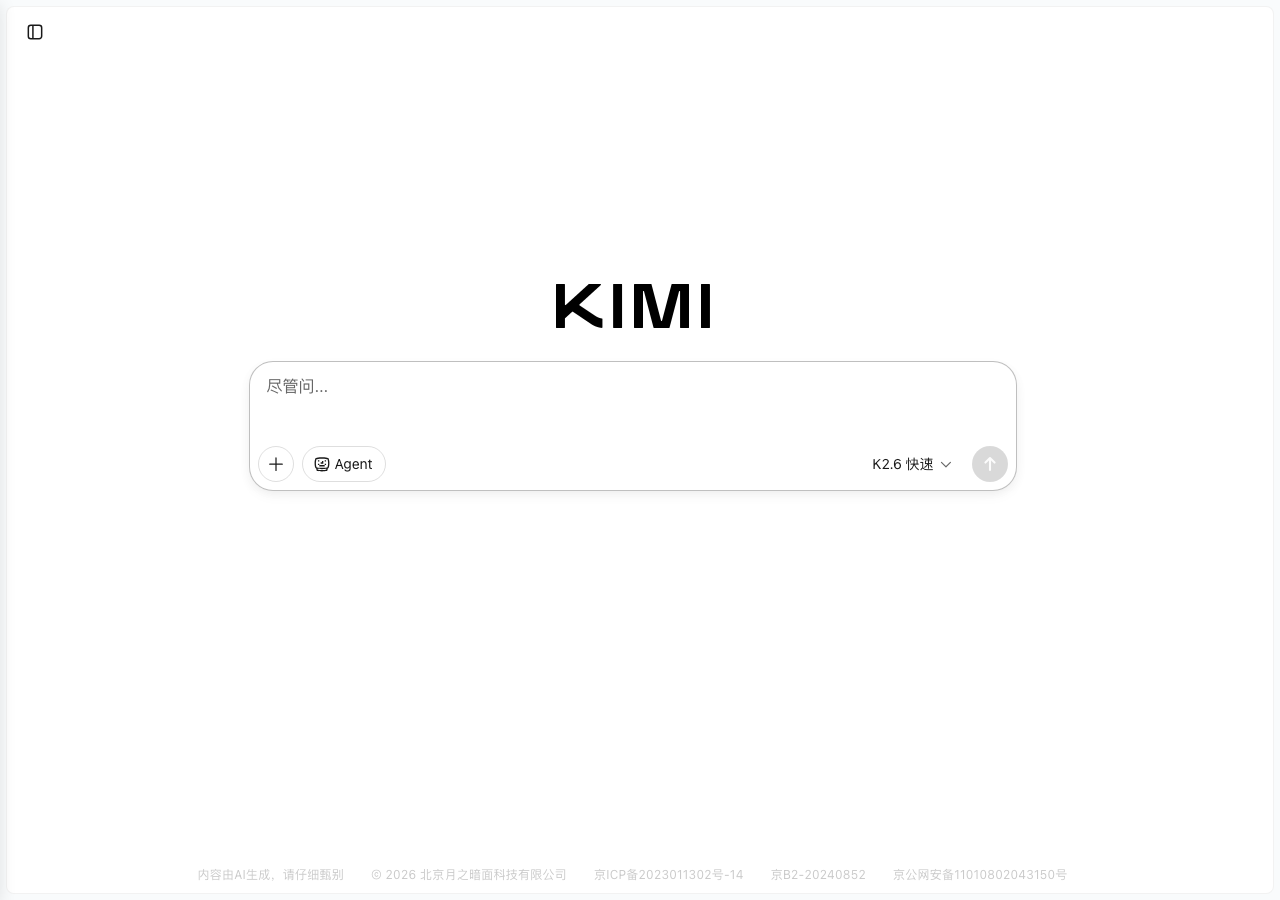
Moonshot AI's Kimi arrived in the international student conversation not through marketing campaigns but through word of mouth in Mandarin-speaking academic communities. Students studying abroad in the UK, Australia, Canada, and the US discovered that Kimi handled their 50-page PDF readings and 5,000-word essay prompts in ways that cheaper free tools could not match. The long-context window — the platform advertises processing capacity well above most free-tier competitors — is the genuine differentiator, and for students drowning in readings before a seminar paper deadline, that capability is not a minor feature.
The underlying Kimi k1.5 model and the earlier Moonshot models were trained with significant Chinese-language data, which creates a nuanced situation for academic writers. On one hand, the bilingual capability is excellent — Chinese students who think through an argument in Mandarin and want to express it in formal English find Kimi more comfortable than tools that only understand the final English output. On the other hand, the English prose occasionally carries tonal markers — a slightly formal, occasionally European-style academic register — that can read strangely in American undergraduate essays expecting a more colloquial analytical voice.
Kimi occupies a unique position in our rankings: it is a regional engine that punches above its category weight on technical capability while carrying the limitations that come with being built primarily for a Chinese-speaking market and navigating the international student use case as a secondary audience. For the right student profile — one who processes source material in Chinese, writes in English, and needs to handle long documents without paying for a subscription — it is genuinely the most underrated tool in the free tier.
Kimi's flagship capability is document processing. Upload multiple PDFs — textbook chapters, journal articles, lecture slides — and Kimi maintains meaningful context across all of them within a single session. This is technically a long-context window advantage, and Moonshot AI has made it a central product feature. For academic use, this translates to practical gains: ask Kimi to synthesize the arguments from three uploaded papers before you write your literature review section, and the quality of the synthesis is measurably better than asking the same question without attached documents. The model stays grounded in what you gave it rather than hallucinating plausible-sounding bibliographies.
The thinking mode, activated with a toggle in the interface, enables slower, multi-step reasoning before Kimi responds. For essay prompts that require comparing theoretical frameworks, structuring a counter-argument, or planning a dissertation chapter, thinking mode produces noticeably more coherent organizational suggestions than the standard mode's faster responses. The tradeoff is latency — thinking-mode responses can take thirty seconds to two minutes for complex prompts. For students who are not under a five-minute deadline, this is worth the wait; for those debugging a quick paragraph at 2 a.m., switch to standard mode.
The free tier at kimi.ai does not display hard daily message limits in the same banner-style warnings that ChatGPT Free uses. Extended usage sessions are possible before the platform asks you to log in or slow down. Anecdotally, power users in online forums report this generosity, though official documentation does not confirm specific limits. As with any free product, assume the terms can change and build your workflow around tools you control, not assumptions about indefinite access.
Essay fit at 8.0 reflects the document-processing and thinking-mode advantages while accounting for the English prose register issue. On a rubric-driven comparative essay where you supply source PDFs, Kimi competes with paid tools. On a cold-start humanities prompt with no attached readings, the output quality dips toward the middle of the free-tier pack.
Long-document processing in practice
The practical workflow for a Kimi-first approach to a research paper looks like this: gather your source PDFs (up to five or six relevant articles works well in testing), upload them at session start, then ask Kimi to identify the central argument, key evidence, and main counter-argument in each. This produces a structured summary you can use to plan your own analytical framework before writing begins. The summaries are accurate enough to trust as reading guides for dense academic prose — not as a substitute for reading, but as a map for navigating where to spend close-reading time.
Longer papers — twenty pages or more — test the limits of how well Kimi maintains coherence across a full document upload session. The first and last thirds of very long papers sometimes get less thorough treatment than the middle sections in synthesis tasks, a pattern consistent with attention distribution challenges in large context models. For course papers in the 2,000 to 8,000-word range, this is rarely a problem. For dissertation chapter work, spot-check the summaries against your actual reading to catch any thin areas.
Image-bearing PDFs — charts, tables, diagrams — are partially processed. Kimi can describe the content of embedded figures but does not always reliably extract numerical data from tables. STEM students relying on data figures should treat extracted numbers as approximate and verify against the original document. Social science and humanities PDFs with mostly textual content process more reliably.
Bilingual workflow for international students
The most practical Kimi advantage for Chinese-speaking students writing English essays is the ability to think and plan in Chinese before switching to English output. Start a session by writing your thesis argument in Mandarin, ask Kimi to challenge it and suggest counterarguments in Chinese, then ask it to translate your agreed-upon argument structure into formal English academic prose. This bilingual planning workflow produces essays that reflect your own analytical thinking rather than adopting whatever framework the AI defaulted to when given a cold English prompt.
The translation quality between academic Chinese and formal English is strong — better than machine translation tools for nuanced argumentation because Kimi understands academic register in both languages rather than just converting surface syntax. The limitation is that it sometimes over-formalizes English output in ways that sound slightly British-scholarly, which works well in UK university submissions but can read as stilted in American college writing styles that expect a less ornate sentence structure. Adding a prompt instruction like 'write in a clear, analytical American academic style, avoid overly formal constructions' reduces this effect.
For students whose first language is not Chinese but who work in other Asian languages — Korean, Japanese, Bahasa Indonesia — Kimi performs above average for a general LLM but does not hold the same native-quality edge it has in Chinese. The Korean and Japanese corpora in the training data are smaller, and complex academic register in those languages is handled with less precision. Students writing in those languages may find Qwen Chat's multilingual training more consistent.
Academic integrity considerations
Kimi's Chinese-market origin means that academic integrity policies around AI use in Chinese universities differ from what international students face at Western institutions. Chinese university policies are generally less mature on AI detection at this point in 2026, but students submitting to UK, Australian, or Canadian universities with active Turnitin AI detection should apply the same revision discipline they would with any AI-assisted draft.
The Kimi-generated English prose has some detectable stylistic markers — a particular preference for certain connecting phrases and a fondness for comprehensive enumeration of sub-points that can read as AI-structured. Editing passes that restructure paragraphs, shorten over-long sub-points, and introduce specific examples from your own course readings break up these patterns effectively.
Data privacy under Chinese law is a real consideration for some students. Kimi operates under PRC data regulations, which may include government data access provisions that differ from EU GDPR or US privacy frameworks. Students working on politically sensitive topics, those with institutional data-use agreements, or those storing personal identifiers in their prompts should review Moonshot AI's privacy policy and consider whether the data handling terms are compatible with their institution's requirements.
Pricing and access
Kimi is free with an optional paid plan that increases context limits and priority access to the thinking mode. As of 2026, the free tier is generous enough for most student use cases — the long-context capability that makes Kimi valuable is available without payment, which is the key differentiator from paid competitors. The paid plan matters for researchers processing very large document sets regularly; for undergraduate coursework, the free tier covers the use case.
Access from outside China and Asia-Pacific is reliable but occasionally slower during peak hours for the Asian user base, which is late afternoon to evening China Standard Time — a time zone that overlaps with Australian morning hours and West Coast evening hours. Students in Australia working in the morning hours or US students working late evening may notice slightly elevated response latency. This is not a disqualifying problem but worth knowing when scheduling your writing sessions.
Compared to other free options: Kimi outperforms Meta AI and Gemini Free on long-document tasks, matches or exceeds ChatGPT Free on reasoning-mode quality, and sits below ChatGPT Plus and Claude Pro on general instruction-following precision. For students who cannot justify $20/month, Kimi offers the closest approximation to frontier-tier document processing among zero-cost options.
Bottom line
Kimi's 8.0 essay fit score reflects a tool that earns its ranking through genuine capability rather than brand recognition. For international students — particularly those who work bilingually in Chinese and English, who have heavy reading loads, and who need to synthesize multiple sources before writing — Kimi is the most undervalued free tool in the current landscape.
The workflow recommendation: use Kimi for document upload and synthesis tasks, bilingual argument planning, and thinking-mode structural work on complex essays. Use a second tool — Claude Free or ChatGPT Free — for editing passes that require precise instruction-following on stylistic adjustments. The two-tool approach captures Kimi's strengths while mitigating its English-register limitations.
Regional status does not mean regional quality — the Kimi k1.5 architecture is a serious piece of engineering, and the essay-fit advantages on document-heavy tasks are real. For students willing to learn the interface and adapt their workflow, this is among the highest-value free options in the current AI writing assistant landscape.
Pricing
- Kimi has a free tier or free product access — rate limits and model caps apply; paid upgrades may exist on kimi.ai.
- Flagship stack: Kimi k1.5 · Moonshot. Features and model names change; verify before you subscribe.
Models & access
Kimi k1.5 · Moonshot. Availability, rate limits, and regional restrictions change — confirm on kimi.ai before subscribing.
Compare alternatives
Who it's for
- Upload source PDFs at the start of every research session — Kimi's document processing is its core advantage and the output quality difference over cold prompts is significant
- Enable thinking mode for complex analytical tasks: thesis construction, theoretical comparison, counter-argument planning; switch to standard mode for quick rewrites
- Use a bilingual workflow if you think in Mandarin — plan your argument structure in Chinese, agree on the framework with Kimi, then request the English draft as a final step
Student experiences
Ratings from students who used Kimi on real assignments — includes critical reviews.
Loading student reviews…
1,714 words · Updated 2026