
Independent review · 2026
Coral Review
Coral is Cohere's consumer chat interface, powered by Command R+ — a model the company built specifically for retrieval-augmented generation and grounded enterprise answering rather than creative writing or general conversational AI. Essay fit 6.6 is an honest assessment of a tool that excels at exactly what its training emphasized and falls short everywhere else. If you understand what Command R+ was designed for and lean into those strengths, Coral is a surprisingly capable research assistant for structured, evidence-grounded writing. If you expect it to behave like ChatGPT or Claude, you will be consistently disappointed by its tonal flatness and occasional hesitation on open-ended analytical prompts.
cohere.com · #28 in TOP 50
Frontier subscription
Command R+
Our verdict
Coral is Cohere's consumer chat interface, powered by Command R+ — a model the company built specifically for retrieval-augmented generation and grounded enterprise answering rather than creative writing or general conversational AI. Essay fit 6.6 is an honest assessment of a tool that excels at exactly what its training emphasized and falls short everywhere else. If you understand what Command R+ was designed for and lean into those strengths, Coral is a surprisingly capable research assistant for structured, evidence-grounded writing. If you expect it to behave like ChatGPT or Claude, you will be consistently disappointed by its tonal flatness and occasional hesitation on open-ended analytical prompts.
Overview
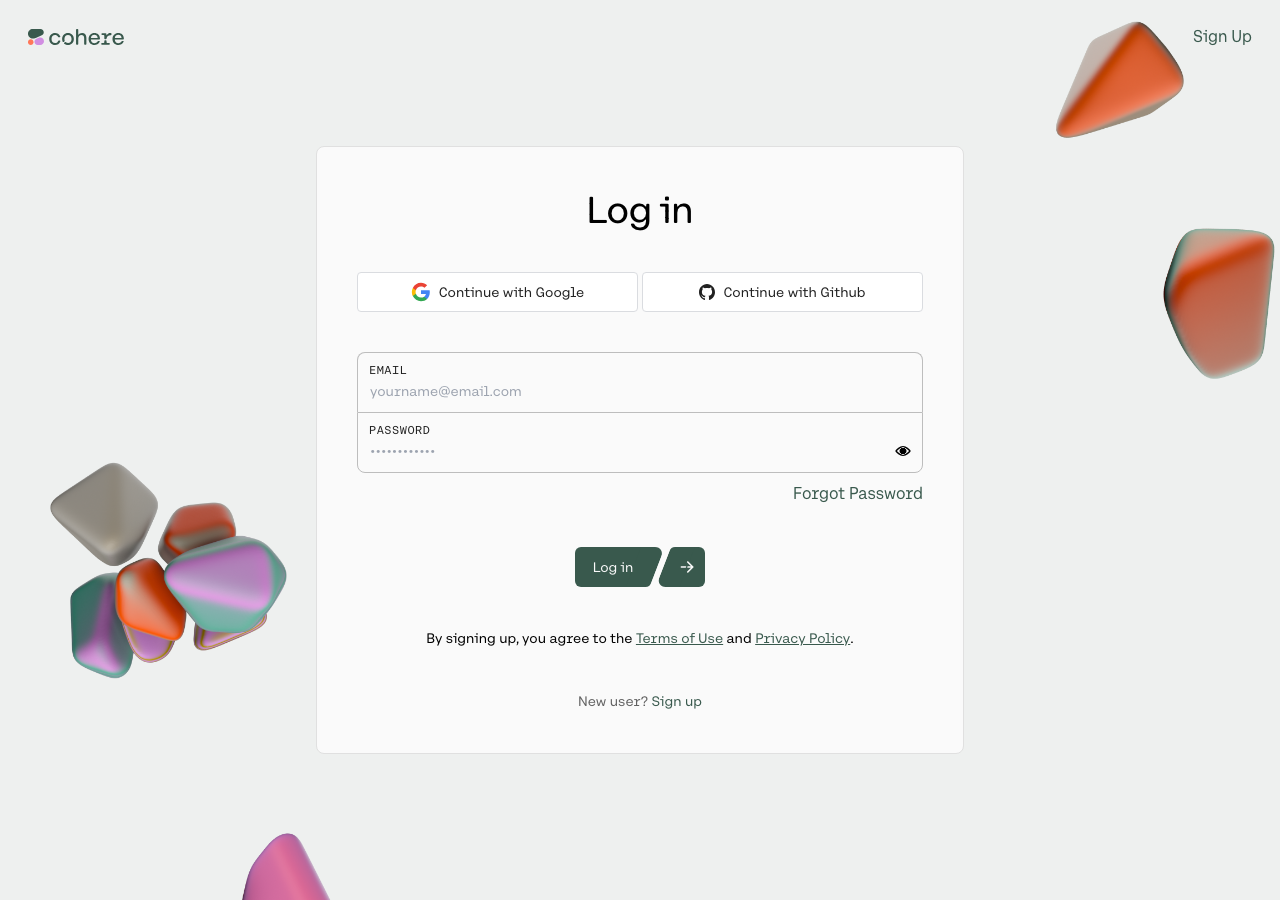
Cohere is a B2B AI company that built Command R and Command R+ for enterprise deployment — document processing, customer support automation, knowledge base retrieval, and business intelligence workflows where accuracy and grounding matter more than conversational fluency. Coral, the consumer-facing chat interface at coral.cohere.com, gives students access to Command R+ for free, which is a meaningful capability gift from a company whose primary customers are paying enterprise contracts. The product has not been designed or heavily marketed to students, which explains why it sits relatively low on discovery metrics despite a model that outperforms its essay fit score on certain structured tasks.
The key design principle behind Command R+ is retrieval-augmented generation (RAG): the model was trained to reason over retrieved documents and produce cited, grounded answers rather than fluent improvisation from training memory. In enterprise contexts, this is a feature — enterprise customers want accurate answers over stylistically impressive but factually unreliable ones. For student essay writing, this same principle produces benefits on evidence-grounded analytical tasks (business case studies, policy analysis with clear source documents) and limitations on tasks requiring stylistic creativity, original argumentation, and the kind of interpretive elasticity that humanities essays reward.
What Command R+ was actually built for
Understanding Command R+ requires understanding retrieval-augmented generation as a design philosophy. Most large language models are trained to produce fluent, contextually appropriate text based on patterns in their training corpus. They are good at sounding right; they are less reliable at being factually right on specific, verifiable claims. RAG-first models like Command R+ were trained with a different optimization target: given a set of retrieved documents, produce an answer that is traceable to those documents, with citations that correspond to real passages in real sources.
For academic writing, this design choice has a direct implication: Coral performs significantly better when you supply it with source material — paste a paper abstract, drop in a few paragraphs from a reading, or quote a primary source — than when you ask it to generate content from training memory alone. This is the opposite of the typical student workflow with ChatGPT, where the expectation is that the model will know things without being told them. With Coral, the better pattern is to bring your sources and ask the model to help you reason over them.
Command R+ is also trained with multilingual enterprise communication in mind — it handles technical English, formal register, structured argument, and professional tone reliably. These features translate well to formal academic writing, business school case analyses, policy briefs, and legal argument structures. They translate less well to the experimental, creative, or stylistically ambitious academic writing that some humanities professors expect — the kind of paper where rhetorical risk-taking and unusual framing earn the highest marks.
Cohere's enterprise positioning also means Command R+ has been calibrated to avoid the overconfident hedging failures that plague ChatGPT on contested empirical questions. The model tends toward caution, acknowledges uncertainty, and flags when a question is outside its reliable knowledge. Students who have been burned by ChatGPT producing confident paragraphs on contested statistics that later failed fact-checking will appreciate Command R+'s more conservative epistemic stance — even though that conservatism sometimes manifests as frustrating vagueness when you want a direct answer.
Coral for structured academic writing
The essay tasks where Coral genuinely overperforms its 6.6 score are those with a clear document basis, a structured argument format, and a need for formal, accurate prose. Business school case analyses — here is the case, here are the decision criteria, argue for option B — are a near-perfect fit for Command R+'s strengths. The model reads structured problem frames well, organizes evidence-based arguments clearly, and avoids the rhetorical inflation that makes ChatGPT responses occasionally feel like business pitch decks rather than rigorous analyses.
Policy analysis essays follow the same pattern: supply the policy document or a summary of the relevant regulation, ask Coral to identify the key stakeholder impacts, and request a structured argument for or against a specific reform. The output will be well-organized, conservative in its claims, and grounded in the text you provided. The limitation is that Coral will not add insights beyond the material you supply — it will not synthesize your provided text with wider theoretical literature unless you explicitly provide that literature as well.
For literature reviews where you have assembled a set of source abstracts or key paragraphs, Coral can help organize them into a thematic synthesis more reliably than models that might introduce sources from training memory alongside your provided materials. Give Coral a set of clearly labeled source excerpts and ask for a synthesis, and it will distinguish between what your sources say and what it is inferring — a meaningful intellectual honesty feature for a research-grounded writing assistant.
Scientific report writing — particularly methods and results sections that require accurate, dry description rather than analytical interpretation — is another strong use case. Coral's formal register and caution about asserting things it does not have evidence for translate well to the flat, precise language that empirical sections require. It will not make your data more interesting than it is, but it will help you describe it accurately.
Limitations for general humanities and creative essay work
The same design choices that make Coral good at structured, evidence-grounded writing make it noticeably weaker at open-ended humanities analysis. A prompt like 'argue for a feminist reading of Hamlet using psychoanalytic theory' will produce a competent but flat response — structurally correct, academically appropriate in register, but lacking the interpretive inventiveness that distinguishes a memorable essay in literary criticism. The model is cautious where the task rewards creativity, structured where the task rewards voice, and conservative where the task rewards argument.
Thesis statement generation on humanities topics is consistently less inspired from Coral than from Claude or ChatGPT. The thesis statements it produces tend toward descriptive claims ('this essay argues that Hamlet's treatment of Ophelia reflects misogynist conventions of Elizabethan theatre') rather than analytical arguments ('Hamlet's deployment of Ophelia as a diagnostic instrument reveals the play's deeper anxiety about the ethics of emotional manipulation'). The former is an essay topic; the latter is a thesis. Students who need thesis-level analytical claims will need to push Coral harder or switch to a model better suited to interpretive generation.
Stylistic monotony is a real issue. Coral produces consistent, correct, somewhat uniform prose. If you are writing four body paragraphs for an economics essay and asking Coral to draft each one, they will read similarly in rhythm, sentence structure, and transition vocabulary. This uniformity is legible as AI-generated prose to experienced readers. Students who value voice and want their writing to have the stylistic variation that reflects genuine intellectual engagement will need to do significant rewriting beyond what Coral produces.
Creative or speculative academic tasks — thought experiments in philosophy, scenario analysis in business strategy, hypothetical legal arguments in law school coursework — expose Coral's cautious epistemology as a limitation rather than a strength. The model hedges where it should speculate, qualifies where it should take a position, and flags uncertainty where the assignment explicitly asks for a committed argument. Training it to take clearer positions requires explicit instruction in the prompt, which adds overhead compared to models that default to more committed argumentation.
Free tier accessibility and Cohere's student relevance
Coral is free to use at coral.cohere.com with a Cohere account, which requires an email address. There is no credit card requirement, and the rate limits on the free tier are generous by mid-tier standards — students can complete substantive writing sessions without hitting restrictions on most days. Cohere's primary revenue comes from enterprise API customers, so the consumer chat product is less aggressively rate-limited than products where the free tier is a funnel toward a subscription.
Account creation gives access to conversation history and the ability to resume sessions, which is necessary for any multi-session essay project. Cohere's data practices are governed by a standard enterprise-oriented privacy policy — the company processes user data primarily for product improvement and does not sell to advertising networks. The privacy story is competent without being remarkable; Cohere is neither as privacy-aggressive as DuckDuckGo nor as data-intensive as Google.
One underappreciated feature for students is Cohere's Command R+ access through the API, which Cohere makes available for research use under permissive terms. Computer science, AI, and data science students who need to run experiments on a capable RAG-optimized model for coursework can access Command R+ at extremely low cost through Cohere's API, which makes Cohere relevant to a specific student segment — those building AI applications as part of their degree — beyond the Coral chat interface.
Cohere has historically engaged with academic institutions through research partnerships, and some universities have institutional access to Command R+ through Cohere's academic programs. Students at participating institutions may have higher rate limits or additional model access than the standard free tier — worth checking with your library or computer science department if you are in a research context.
Comparing Coral with similar-tier tools
Coral's closest comparison point is Phind, which also sits below the major consumer frontier products and has a specific domain focus — Phind optimizes for developer and technical writing rather than Coral's enterprise retrieval focus. For STEM-adjacent essay writing, the two are comparable in essay score (6.6 vs 6.4), with Coral stronger on formal business and policy prose and Phind stronger on code-adjacent technical writing.
Against Claude Free, Coral loses on analytical depth and stylistic range while winning on structured, document-grounded tasks. If you have a specific source text you need help reasoning over, Coral's RAG-trained instincts make it more reliable than Claude Free for that specific task. If you need open-ended analysis without supplied documents, Claude Free's more capable model produces better results.
Against GPT-4o mini (available through DuckDuckGo AI Chat or OpenRouter), Command R+ is competitive on structured writing and weaker on conversational fluency and general-purpose analytical tasks. The choice between them depends on task type: bring a document to analyze and Coral is as good or better; ask for a general humanities synthesis from memory and GPT-4o mini wins.
For business school students specifically, Coral's enterprise focus makes it the most professionally calibrated free option among the lower-tier engines. The prose it produces for case analyses, stakeholder argument briefs, and structured business proposals is closer to professional consulting document style than the more academic prose that Claude and ChatGPT default to. This is a genuine differentiator for students whose assignments evaluate professional communication rather than academic argumentation.
Bottom line
Coral earns essay fit 6.6 with a clear profile: it is the right free tool for structured, document-grounded, formally toned academic writing, and the wrong tool for interpretive humanities work, creative academic arguments, and analytical tasks that require going beyond supplied evidence.
Business, policy, law, and STEM students writing formal analytical documents with clear source material will get more from Coral than its position in the rankings suggests. Humanities students writing interpretive essays will find it frustratingly conservative and stylistically limited.
Compare Claude Free for better open-ended analytical depth; compare Phind if technical writing and CS paper coverage matters more; compare OpenRouter for access to Command R+ alongside other models if you want to use it selectively alongside stronger alternatives.
Pros
- Command R+ is explicitly trained for grounded, document-based reasoning — strong when you supply source material.
- Conservative epistemic stance — flags uncertainty rather than asserting confident wrong answers.
- Formal register and structured output suit policy briefs, case analyses, and scientific reports.
- Free tier is genuinely usable with generous rate limits for a non-subscription-funnel product.
- Relevant to CS and AI students via low-cost API access for RAG experimentation.
Cons
- Stylistically flat — uniform prose without the voice variation that distinguishes good humanities writing.
- Weak on open-ended analytical speculation, creative thesis generation, and interpretive tasks.
- Performs best only with supplied source text — less capable without document grounding.
- Not marketed to students — no community prompt resources, tutorials, or academic writing guides.
- Not competitive with frontier models for complex analytical synthesis from training data alone.
Pricing
- Coral has a free tier or free product access — rate limits and model caps apply; paid upgrades may exist on cohere.com.
- Flagship stack: Command R+. Features and model names change; verify before you subscribe.
Models & access
Command R+. Availability, rate limits, and regional restrictions change — confirm on cohere.com before subscribing.
Compare alternatives
Who it's for
- Command R+ is explicitly trained for grounded, document-based reasoning — strong when you supply source material.
- Conservative epistemic stance — flags uncertainty rather than asserting confident wrong answers.
- Formal register and structured output suit policy briefs, case analyses, and scientific reports.
- Free tier is genuinely usable with generous rate limits for a non-subscription-funnel product.
Who should compare alternatives
- Stylistically flat — uniform prose without the voice variation that distinguishes good humanities writing.
- Weak on open-ended analytical speculation, creative thesis generation, and interpretive tasks.
- Performs best only with supplied source text — less capable without document grounding.
- Not marketed to students — no community prompt resources, tutorials, or academic writing guides.
Student experiences
Ratings from students who used Coral on real assignments — includes critical reviews.
Loading student reviews…
2,094 words · Updated 2026